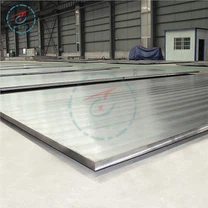

Titanium-steel composite plate is a composite material plate composed of two materials, titanium, and steel. It combines the advantages of titanium alloy and steel and has the characteristics of high strength, lightweight, corrosion resistance, and cost-effectiveness.
1. High strength and lightweight: Titanium-steel composite plates inherit the high-strength properties of titanium alloys, and also have the high strength and rigidity of steel. Compared with pure steel materials, titanium-steel composite plates have lighter weight, which can realize the lightweight design of structures, improve load capacity and save energy.
2. Corrosion resistance: Titanium steel clad plate has the corrosion resistance of titanium alloy and can resist the corrosion and erosion of acid, alkali, salt water, and oxidizing medium. This makes the titanium-steel clad plate have important application value in the fields of ocean, chemical industry, and aerospace.
3. Cost-effectiveness: Compared with pure titanium alloy, titanium-steel clad plate is more competitive in cost. Titanium-steel clad plates are able to combine the high-strength properties of titanium alloys with the economy of steel, providing a cost-effective material option.
4. Wide range of applications: Titanium steel composite plates are widely used in aerospace, automobile, shipbuilding, chemical industry, medical equipment, and other fields. It can be used to make aircraft structures, automotive body parts, marine engineering equipment, chemical containers, and medical implants, among others.

The following are some development trends of titanium steel composite plates
1. New composite technology: The preparation technology of titanium-steel composite plates continues to develop. The commonly used preparation methods include explosive cladding, rolling cladding, and hot pressing cladding. Future development trends may involve new composite processes, such as laser welding, magnetic composite, etc., to improve the quality and production efficiency of composite plates.
2. Material combination optimization: Titanium-steel composite plates can be optimally designed by adjusting the layer thickness ratio of titanium and steel and selecting appropriate titanium alloy and steel materials. The future development trend will focus on selecting higher-strength and lighter titanium alloy materials and high-strength steel materials to further improve the performance of composite plates.
3. Multi-layer composite structure: The performance of titanium-steel composite plates can be optimized by a multi-layer composite structure. The multi-layer structure can provide higher strength and rigidity and can distribute stress, thereby improving the fatigue resistance and durability of the composite plate.
4. Multifunctional application: In addition to traditional structural applications, titanium steel composite plates also have the potential to achieve multifunctional applications in many fields. For example, in the field of aerospace, titanium-steel composite plates can be used to manufacture aircraft fuselage structures and duct plates, which have high strength and good corrosion resistance. In the automotive field, titanium steel composite plates can be used to manufacture body parts to achieve lightweight and improve crash safety performance.
5. Environmental friendliness: As the requirements for environmental sustainability increase, future development trends will focus on the environmental friendliness of titanium-steel clad plates. This may include aspects such as recyclability of materials, reduction of energy consumption, and emission reduction measures in the manufacturing process.
Titanium-steel clad plates will definitely gain a bigger market in the near future, let us look forward to it together!