

Titanium is a silvery-white metal with atomic number 22. It is a lightweight, ductile, strong, corrosion-resistant, and biocompatible metal with a high strength to weight ratio. Titanium is the 9th most abundant element on Earth. Titanium is one of the strongest metals due to its resistance to heat, water, and salt and lightweight, which are the main reasons it is used in common applications such as jewelry and essential applications like implants and the construction of aircraft and ships.
Benefits of Titanium
Resistance to corrosion
When exposed to air, a thin layer of oxide forms on the surface of titanium. This layer is very difficult for most materials to penetrate. As such, titanium demonstrates fantastic resistance to corrosion and will not suffer adverse changes due to corrosive substances.
High strength
One of the biggest advantages of titanium is its strength. Not only is it one of the strongest metals on the planet, it also has the highest strength-to-density ratio of any metallic element on the periodic table.
Non-toxic
Titanium is bio-compatible. It is completely non-toxic to both humans and animals and, as a result, can be safely implanted into the body without causing an adverse reaction. This is why titanium is commonly used within the medical industry and for dental implants.
Low thermal expansion
Titanium has a low coefficient of thermal expansion. It will not expand and contract anywhere near as much under extreme temperatures. It expands approximately 50% less than steel, and therefore provides much greater structural stability.
High melting point
This is one of the key benefits of titanium. It demonstrates an exceptionally high melting point (around 1668°C) and, as such, is perfect for use in high-temperature applications. For example, it's the metal of choice for foundries, turbine jet engines and even some satellites.


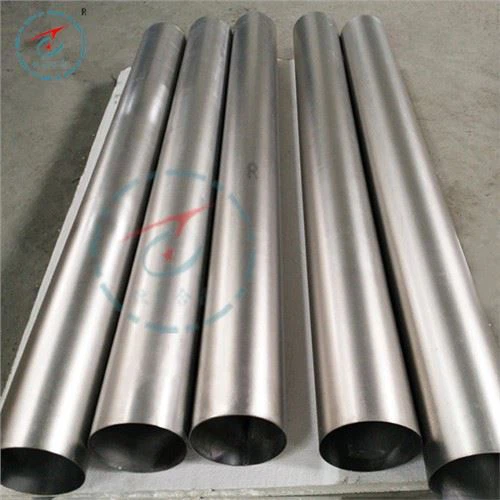


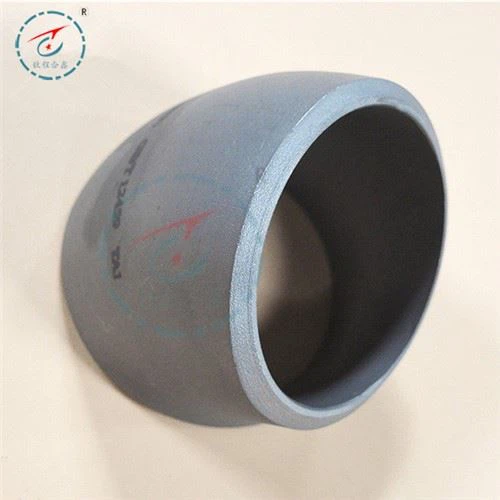

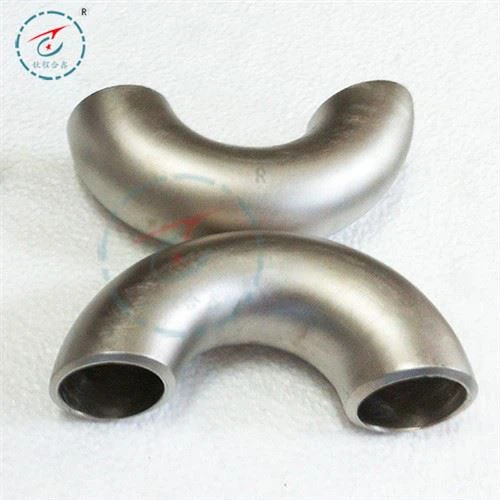
Advanced equipment
We have 50 sets of Grinding & polishing machine, 2 sets of Automatic polishing Machine, 1 set of TianDuan 1600ton oil press machine, 1 set of Thirteen roller straightener etc.
Our honor and patents
We have obtained 1 national invention patents and 17 utility model patents, and was recognized as a high-tech enterprise by Shaanxi Provincial Science and technology department.
Rich experience
Founded in 2005, after more than ten years of hard work and development, it has many subsidiaries.
Rich production experience
The company has two complete metal composite production lines: explosive cladding and explosion with rolling, with an annual production capacity of 50000 tons.
Titanium has a silvery-gray or silvery-white color. However, titanium can achieve the full spectrum of color if anodized in specific ways. By controlling the voltage during the anodization process, different colors of titanium can be achieved.
What Does Titanium Look Like?
Titanium is commonly found in igneous and sedimentary rocks and minerals. Ilmenite (titanium-iron oxide) and rutile are the two minerals from which titanium is commonly extracted. Ilmenite is a grayish-black rock, while rutile is a dark brown to black rock with a crystal-like appearance.
Grade 5 (Ti 6Al-4V) titanium is the most versatile grade of titanium due to its wide range of desirable properties. It has high strength and ductility and is also corrosion-resistant, thermally stable, and highly formable. Its properties enable Grade 5 titanium to be ideal across a broad scope of industries and applications: from automotive and aerospace parts to sporting goods and consumer products.
What is the Density and Strength of Titanium?
Titanium's density is 4.506 g/cm3. The strength of titanium depends on the grade of titanium and the concentration of its alloying elements. The strength of titanium ranges from 240 MPa (commercially pure Grade 1) to 1241 MPa (Ti-10V-2Fe-3Al alloy).

What Are the Properties of Titanium?
Electrical resistivity: Titanium's electrical resistivity ranges from 51 μΩ/cm (Ti-0.8Ni-0.3Mo) to 198 μΩ/cm (Ti-8Al-1Mo-1V).
Thermal conductivity: Titanium's thermal conductivity ranges from 6 W/m*k (Ti-6Al-2Sn-4Zr-2Mo) to 22.7 W/m*k (Ti-0.8Ni-0.3Mo).
Reactive at high temperatures
Titanium is generally unreactive and inert due to its protective oxide layer. However, titanium is reactive at high temperatures (>700 °F). This makes the fabrication of pure and alloyed titanium tedious and highly controlled. Titanium production must be performed in a carefully controlled oxygen-free environment.
Expensive
Refining raw rocks and minerals to obtain pure titanium is expensive and complex. This is due to titanium's reactivity at high temperatures and the breadth of processes within the KROLL process needed to isolate titanium.
Difficult to machine
Titanium can be difficult to machine due to its low thermal conductivity. The heat generated during machining builds up in the tool rather than the workpiece. This can lead to reduced tool life and machining quality.
Low unstable creep resistance
Titanium has low creep resistance at high temperatures above 570 °F. Creep is the slow deformation of a material when subjected to constantly applied loads and is more prevalent in high-temperature environments.
Titanium is obtained from various ores that occur naturally on the earth. The primary ores used for titanium production include ilmenite, leucoxene, and rutile. Ilmenite and leucoxene are titaniferous ores. Ilmenite (FeTiO3) contains approximately 53% titanium dioxide. Leucoxene has a similar composition but has about 90% titanium dioxide. They are found associated with hard rock deposits or in beaches and alluvial sands. Rutile is relatively pure titanium dioxide (TiO2). Anatase is another form of crystalline titanium dioxide and has just recently become a significant commercial source of titanium. They are both found primarily in beach and sand deposits.
Casting and Forging of Titanium
Titanium can be either cast or forged. Forged titanium is usually stronger due to the compressive forces placed on the metal during processing cause better affinity in the metals structure. Casting, where the metal is poured into a mould is used in lower cost titanium applications where the optimum performance from the metal is not required.
What Grades of Titanium Are There?
Grade 1
Grade 1 titanium is the softest grade of titanium, which makes it very formable. It offers a high ductility while still maintaining the necessary impact toughness. This grade is most often used in plates, tubing, piping, and a range of other applications where a higher level of weldability and formability is important.
Grade 2
For slightly stronger metal, there is Grade 2 titanium. It is still very moldable, but has a higher tensile strength. Grade 2 titanium is very widely available, which makes it more affordable than other grades. The common product forms include everything from bar and billet to plate and wire.
Grade 3
Grade 3 titanium is not used near as much as grade 2, but it still has its uses. It is stronger than grades 1 and 2, features good weldability, and extremely high corrosion resistance.
Grade 4
Grade 4 titanium is the strongest pure grade titanium, but it is also the least moldable. Still, it has a good cold formability, and it has many medical and industrial uses because of its great strength, durability and weldability.
Grade 5 (Ti 6Al-4V) titanium
Ti 6AI-4V (a.k.a grade 5) is the most common of titanium alloys, and it referred to as the “workhorse” of the aerospace industry for a reason. It can resist temperatures up to 600 degrees Fahrenheit, is strong, light-weight, highly formable, and extremely corrosion resistant.
Grade 7
Grade 7 is the most corrosion resistant of the titanium alloys. It features most of the properties of grade 2 pure titanium, but the added palladium helps increase the weldability and formability.
Grade 12
Grade 12 has a strength that is similar to the 300 series steels, and it has a very high formability and weldability, making it a good choice for various fabricated applications.
Grade 23 (Ti 6AL-4V ELI) titanium
Ti 6AL-4V ELI, or Grade 23, has is often made into coils, strands, wires or flat wires. It is made of a combination of titanium, vanadium and aluminum, which gives it a very high tensile and yield strength while reducing the ductility and weldability.
Titanium typically contains trace amounts of various elements, including oxygen, nitrogen, hydrogen, carbon, and iron. These impurities can influence the properties and behavior of titanium alloys, affecting factors such as strength, ductility, and corrosion resistance.

Application of Titanium
Jewelry
Titanium is commonly used in jewelry to make piercings, wristwatches, necklaces, rings, and other items due to its durability, light weight, and corrosion resistance. Additionally, titanium is sometimes mixed with gold to make 24-karat gold alloys which are harder and more durable than pure gold alternatives.
Medical
Titanium is a highly critical metal in the medical industry due to its high strength, fatigue resistance, and biocompatibility. Titanium is often used in surgical and dental tools, implants, and joint replacements. Osseointegration, the ability of a bone and artificial implant to form a structural and functional connection, is possible with titanium.
Industrial
Titanium is commonly used in a broad range of industrial environments due to its high strength and fatigue resistance, corrosion resistance, light weight, and durability. Uses of titanium in industrial settings include heat exchangers, tanks, reactors, valves, pipes, connecting rods, pumps, and more.
Aerospace
Titanium is a great choice for the manufacture of aerospace parts and vehicles and accounts for nearly 50% of the total weight of an aircraft. Titanium is valued in the aerospace industry because of its low density, high strength-to-weight ratio, corrosion resistance, and fatigue resistance.
Architectural
Titanium is ideal for architectural products due to its light weight, high strength, corrosion resistance, and durability. While steel is still preferred to titanium when it comes to building frames, titanium is often used for glass frames, facades, roofs, interior wall surfaces, and ceilings due to its corrosion resistance and high strength-to-weight ratio.
Composites
Titanium-based composites are recently developed materials that utilize titanium’s strength and weight characteristics to produce titanium fiber-reinforced or particulate (powder) reinforced composites. Titanium composites exhibit higher stiffness, wear resistance, and strength than conventional alloys.
Automotive industry
Titanium is often used in the automotive industry to make engine parts, crankshafts, valve seats, connecting rods, exhaust systems, suspension systems, and automotive frames. Titanium is highly coveted in the automotive industry due to its low density, high strength-to-weight ratio, corrosion resistance, and heat resistance.
Chemical processing
Titanium is often used in the chemical processing industry due to its corrosion resistance and chemical inertness. While the reactivity of titanium significantly increases at higher temperatures (>700 °F), titanium is generally unreactive and stable at lower temperatures.

Its components primarily consist of titanium ore, which is extracted through various processes to produce pure titanium metal. Once extracted, titanium can be alloyed with other metals such as aluminum, vanadium, or iron to enhance specific properties like strength, durability, and heat resistance.
At What Temperature Does Titanium Lose Strength?
Titanium loses strength when heated above 430 °C (806 °F). Titanium is not as hard as some grades of heat-treated steel; it is non-magnetic and a poor conductor of heat and electricity. Machining requires precautions, because the material can gall unless sharp tools and proper cooling methods are used.
Dry environment
Store titanium components in a dry environment to prevent moisture buildup, which can lead to corrosion. Avoid areas prone to humidity or condensation.
Protection from contaminants
Keep titanium away from contaminants such as dust, dirt, and chemicals that can degrade its surface or properties. Store it in clean, dust-free containers or packaging.
Avoid exposure to air
Minimize exposure to air by sealing titanium components in airtight containers or wrapping them in protective materials such as plastic or paper. This helps prevent oxidation and surface discoloration.
Temperature control
Maintain consistent temperature conditions within the storage area to prevent fluctuations that could affect the integrity of titanium. Avoid extreme temperature variations.
Avoid impact and pressure
Handle titanium components with care and store them in a way that minimizes the risk of impact or pressure that could cause deformation or damage.
Regular inspection
Periodically inspect stored titanium components for signs of corrosion, damage, or degradation.


Taicheng Group specializes in R & D, production and deep processing of layered metal composites, titanium and titanium alloy series metal materials. The company has two complete metal composite production lines: explosive cladding and explosion with rolling, with an annual production capacity of 50000 tons.


As one of the most professional titanium manufacturers and suppliers in China, we're featured by quality products and competitive price. Please rest assured to buy or wholesale customized titanium made in China here from our factory. Contact us for quotation and pricelist.
titanium fasteners, titanium tubing for sale, t1 6al 4v(0/10)

