

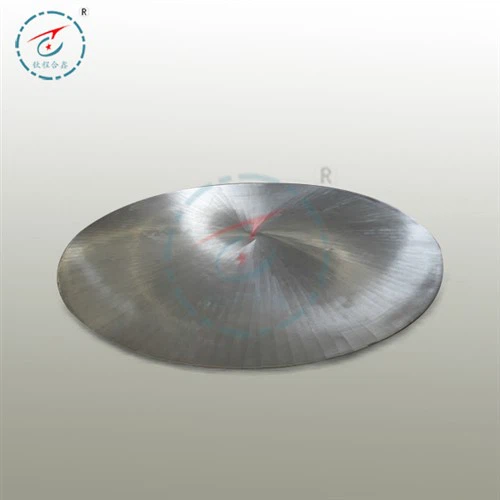
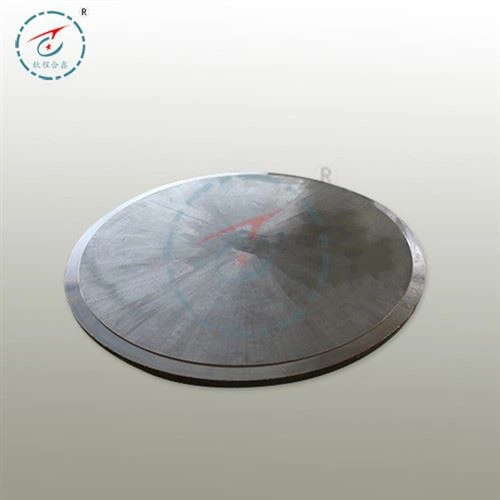
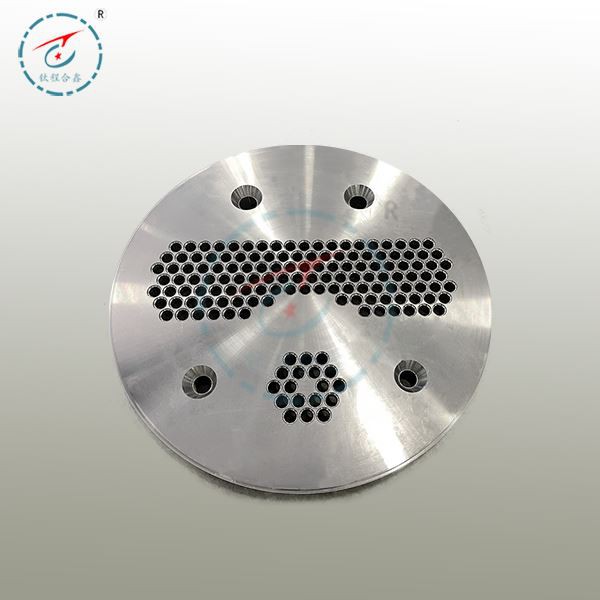
A clad tube sheet is a plate, sheet, or bulkhead which is perforated with a pattern of holes designed to accept pipes or tubes. These sheets are used to support and isolate tubes in heat exchangers and boilers or to support filter elements. A clad tube sheet may be covered in a cladding material which serves as a corrosion barrier and insulator and may also be fitted with a galvanic anode. Clad tube sheets may be used in pairs in heat exchange applications or singularly when supporting elements in a filter.
Corrosion resistance
It has excellent corrosion resistance and can resist the erosion of various corrosive media such as acid, alkali, and salt. This allows it to maintain material integrity and long life in a variety of harsh environments.
Lightweight design
Compared with traditional metal materials, the clad tube sheet has a lower density, making it an ideal choice for a lightweight design. It can reduce the dead weight of the structure and improve the efficiency and performance of the system.
High strength
It has high strength and can withstand large mechanical stress and external impact. This enables it to provide sufficient strength and stability in structural design. It has good toughness and can maintain the integrity and durability of the material when subjected to shock or vibration.
Material compatibility
Clad tube sheets allow for the use of different materials for the base and cladding layers, offering flexibility in material selection to meet specific application requirements. This compatibility ensures optimal performance and longevity in diverse operating conditions.





Advanced equipment
We have 50 sets of Grinding & polishing machine, 2 sets of Automatic polishing Machine, 1 set of TianDuan 1600ton oil press machine, 1 set of Thirteen roller straightener etc.
Our honor and patents
We have obtained 1 national invention patents and 17 utility model patents, and was recognized as a high-tech enterprise by Shaanxi Provincial Science and technology department.
Rich experience
Founded in 2005, after more than ten years of hard work and development, it has many subsidiaries.
Rich production experience
The company has two complete metal composite production lines: explosive cladding and explosion with rolling, with an annual production capacity of 50000 tons.
A clad tube sheet in a heat exchanger is a plate with holes drilled in at optimal positions. Tubes then pass through these holes. The tube sheet holds the tubes in place within the heat exchanger to ensure effective heat transfer. In shell and tube heat exchangers, two plates support the tubes, one on each end. Fluid passes through the tubes while a second fluid (coolant) flows within the shell surrounding the tubes.
What is the Performance of Clad Tube Sheets?
For tube and shell heat exchangers, when single material can't stand the medium corrosion, the exchangers must use double metals tube sheets, clad tube sheets. Sometimes, even though there is only one medium corrosion, the tube sheet is larger and thinner, using clad tube sheets is less expensive than the whole precious metal materials. The clad tube sheets' properties are even higher quality in a way. The clad tube sheets are well-bonded. Clad tube sheets are the first choice for heat exchangers.

Preparation
Before welding, the surfaces of both the clad tube sheet and the clad pipe need to be properly cleaned and prepared to ensure good weld quality. This involves removing any contaminants, oxides, or debris from the surfaces.
Alignment
The clad pipe is aligned with the corresponding tube holes in the tube sheet to ensure proper fit and alignment. This alignment is critical to ensure a secure and leak-free connection.
Welding
Tack welds help maintain alignment during the welding process and prevent movement or misalignment. Once the clad pipe is securely positioned on the tube sheet, the welding process begins.
Inspection
The welded joints are inspected using non-destructive testing methods such as ultrasonic testing or radiographic testing to ensure the integrity and quality of the welds.
Visual inspection
This is the simplest method of clad tube sheet inspection, which involves a visual examination of the tube sheet surface for any visible cracks, corrosion, erosion or other signs of damage.
Dye penetrant inspection (DPI)
This method involves applying a dye penetrant to the surface of the clad tube sheet and then wiping off the excess. The penetrant is then drawn into any cracks or other surface defects by capillary action. A developer is applied, which draws the penetrant out of the cracks and makes them visible.
Magnetic particle inspection (MPI)
This method involves applying a magnetic field to the clad tube sheet and then applying ferromagnetic particles to the surface. Any surface cracks or defects will cause the magnetic field to be distorted, making the particles cluster at the location of the defect, which can then be visually detected.
Ultrasonic testing (UT)
This method uses high-frequency sound waves to detect defects in the clad tube sheet. A probe is placed on the surface of the tube sheet, which emits sound waves that travel through the material. Any defects in the material will cause some of the sound waves to be reflected back to the probe, which can be detected and analyzed.
Eddy current testing (ECT)
This method involves passing an alternating electrical current through a coil, which induces eddy currents in the clad tube sheet. Any defects in the material will cause changes in the eddy currents, which can be detected and analyze.
These are usually made of low carbon steel material, with a varying thickness based on the fluid pressure. Depending on the final application the clad tube sheet can be cladded with stainless steel or other super alloys or even be entirely made out stainless steel or superalloys. The most common types of holes experienced in clad tube sheet dilling are triangular, rotated triangular, square and rotated square.
Petrochemical industry
Clad tube sheets are commonly used in the petrochemical industry for heat exchangers, condensers, and reactors. Their resistance to corrosion and high temperatures makes them ideal for handling various chemicals and hydrocarbons.
Oil and gas industry
In the oil and gas sector, clad tube sheets are utilized in offshore platforms, refineries, and pipelines for heat exchangers, boilers, and pressure vessels. Their corrosion resistance and durability make them suitable for harsh environments.
Chemical processing
Clad tube sheets are essential in chemical processing plants for equipment such as reactors, distillation columns, and storage tanks. Their resistance to corrosion and chemical attack ensures safe and efficient operation.
Power generation
In power plants, clad tube sheets are employed in boilers, condensers, and heat recovery steam generators (HRSG). Their ability to withstand high temperatures and pressures makes them crucial components in power generation equipment.

Manufacturing materials
Clad tube sheets generally use metal materials such as steel, copper, and aluminum, and the specific selection is based on different usage environments and requirements. Its corrosion resistance and reliability can be guaranteed in high temperature and high pressure environments.
Processing
Clad tube sheet processing generally uses plate shearing, bending, drilling and other methods to process the plate into the required shape and size. During the processing, attention should be paid to ensuring the flatness and dimensional accuracy of the plate to ensure the effectiveness and reliability of the tube sheet.
Welding
Welding is required during the manufacturing process of clad tube sheets, and methods such as manual arc welding, gas shielded welding, and resistance welding are generally used. During the welding process, attention should be paid to ensuring the quality and firmness of the weld, as well as the corrosion protection and surface cleanliness of the welding area to ensure the service life and safety of the tube sheet.
Surface treatment
In order to enhance the corrosion resistance, thermal insulation and aesthetics of the clad tube sheet, surface treatment is required. Generally, spraying, electroplating, galvanizing and other methods are used to form a protective layer and aesthetic layer on the surface of the tube sheet to ensure the use effect and long-term performance of the tube sheet.
Quality control checks
Quality control checks are conducted to ensure that the composite panels meet the required standards. This includes checking for any defects, such as delamination or uneven surfaces. The tube sheets are also tested for their strength, resistance to moisture, and other performance characteristics.
Clad tube sheets significantly enhance the efficiency of heat exchangers by providing a corrosion-resistant surface for tubes or pipes to be attached. This corrosion resistance ensures prolonged service life and minimizes fouling or degradation of heat transfer performance over time. By preventing corrosion and maintaining optimal heat transfer rates, clad tube sheets help maximize the efficiency and reliability of heat exchangers, ensuring consistent operation and energy savings in various industrial applications.

Cleaning and maintenance
You can use cleaning agents to clean the clad tube sheets. Be careful not to use cleaning agents that are too strong in acid or alkali to avoid damage to the tube sheet materials.
Anti-corrosion and anti-rust
The clad tube sheet is susceptible to moisture. Anti-corrosion and anti-rust treatment should be carried out in time after use to extend its service life.
Regular inspection
It is necessary to regularly check the use of the clad tube sheet, find problems in time and repair them, so as to avoid the failure from expanding or causing more serious safety accidents.

Periodic testing
Conduct periodic non-destructive testing (NDT) of the clad tube sheet and welded joints using methods such as ultrasonic testing or radiographic testing. This can help detect hidden defects or deterioration that may not be visible during visual inspections.
Installation inspection
Thoroughly clean and prepare the surfaces of both the clad tube sheet and the clad pipes before welding to remove any contaminants, oxides, or debris that could affect weld quality and integrity.
Operating specifications
When using the heat exchanger, pay attention to standardized operations and do not apply excessive force to avoid tube plate deformation, breakage and other failures.
Cleaning and maintenance
Heat exchangers that have been used for a period of time should be cleaned and maintained to ensure the cleanliness and smoothness of the tube sheet. At this time, care should be taken to avoid using chemicals and sharp objects to avoid damage to the tube sheet.
Operating conditions
Care is taken to review operating conditions such as temperature, pressure, and fluid composition to ensure that the composite tubesheet remains within its limits and operates effectively over time.


Taicheng Group specializes in R & D, production and deep processing of layered metal composites, titanium and titanium alloy series metal materials. The company has two complete metal composite production lines: explosive cladding and explosion with rolling, with an annual production capacity of 50000 tons.


As one of the most professional clad tube sheet manufacturers and suppliers in China, we're featured by quality products and competitive price. Please rest assured to buy or wholesale customized clad tube sheet made in China here from our factory. Contact us for quotation and pricelist.
stainless steel hygienic cladding, Fixed tube sheet heat exchanger, Titanium Steel Clad Tube sheet for Condensers(0/10)

