

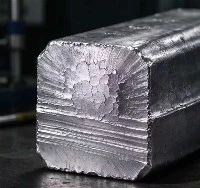

Titanium metal features high strength, high toughness and excellent corrosion resistance, and is widely used in aerospace, medical devices, high-end manufacturing, automotive industry, marine engineering, new energy and other sectors.
According to market research data,the global titanium metal market size is expected to reach approximately 12 billion US dollars in 2025,with an annual growth rate of 5% to 6%.Driven by rising demand for high-perfprmance titanium materials across industries,titanium metal boasts broad application prospects.
Titanium melting is the core process that melts titanium feedstock at high temperature,removes impurities and produces homogeneous titanium alloy, which is critical to guarantee the superior performance of titanium products. At present, the mainstream melting technologies include Vacuum Arc Remelting (VAR), Electron Beam Melting (EBM) and Cold Crucible Induction Melting (CCIM). Vacuum Arc Remelting (VAR) uses electric arc to melt titanium raw materials under high vacuum to remove impurities and improve purity. Electron Beam Melting (EBM) adopts high-energy electron beam as heat source in high vacuum environment to further enhance the purity and structural uniformity of titanium. Cold Crucible Induction Melting (CCIM) applies high-frequency induction heating to melt titanium feedstock in suspension state, avoiding contact with crucibles and minimizing contamination.
The core objectives of titanium melting R&D are to purify titanium materials and optimize production processes to cut costs and boost economic benefits. Although the initial investment in R&D and production of high-performance titanium metal is relatively high, it brings remarkable long-term returns. Advanced melting processes can reduce production costs by 20% to 30%, and lower the frequency of equipment replacement and maintenance expenses. Nevertheless, this technology is highly sophisticated. For a long time, domestic customers had limited recognition of homemade titanium products, creating high market entry barriers for the industry.
Continuous technical breakthroughs have brought outstanding advantages to this melting process. It delivers high purity by effective impurity removal, which improves the mechanical properties and corrosion resistance of titanium. It ensures uniform microstructure for consistent and reliable product performance. The process features great controllability;temperature, pressure and other parameters can be precisely adjusted to tailor the composition and properties of titanium. Meanwhile, it helps reduce energy consumption and material loss for better economic efficiency.
Titanium materials produced by this melting technology serve a wide range of core scenarios. In aerospace, they are applied to aero-engines and aircraft structural components to improve safety and performance. For medical devices, they are used for artificial joints and surgical instruments to enhance reliability and durability. They are also indispensable for precision instruments, high-end equipment, automotive engine parts, suspension systems, marine vessels and offshore platforms, wind power and solar power facilities.
Titanium melting technology is an important pillar for China's titanium industry to enter the global market and a key driver of innovation in new materials. Through persistent technical research and strict verification, domestic titanium products have gradually broken international monopolies and set new benchmarks for high-end manufacturing in China. Looking ahead, with technological advancement and growing market demand, advanced titanium melting technology will continue to lead the industry trend. We will provide high-quality titanium products and supporting solutions for global clients. Titanium metal will remain an indispensable high-performance material in aerospace, medical, new energy and many other high-end fields.
(The above content is compiled from online sources and is for sharing purposes only.)


