

European aircraft manufacturer Airbus has urged the West not to impose an embargo on the import of Russian titanium. The head of the airline, Guillaume Fourie, believes that such restrictive measures would not have a significant impact on the Russian economy, but would seriously damage the global aviation industry.
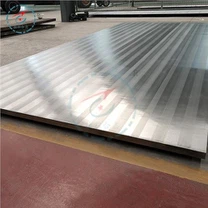
Titanium is almost irreplaceable in aircraft manufacturing, where it is used to make engine screws, casings, wings, skins, pips, fasteners, and more. So far, it has not entered the sanctions program imposed on Russia by Western countries. Currently the world's largest titanium producer "VSMPO-Avisma" is located in Russia.
According to reports, before the crisis, the Russian company supplied up to 35% of Boeing's titanium needs, 65% of Airbus' titanium needs, and 100% of Embraer's titanium needs. But about a month ago, Boeing announced that it was suspending purchases of the metal from Russia instead of supplying from Japan, China, and Kazakhstan. In addition, the U.S. company drastically reduced production due to quality problems with its new flagship Boeing 737 Max, delivering only 280 civil aircraft to the market last year. Airbus relies much more heavily on Russian titanium. The European airline manufacturer also plans to increase production of its A320 airliner, which is a major competitor to the 737 and has captured much of Boeing's market in recent years.
At the same time, Airbus does have a large inventory. That is, even if Russia initiates an embargo, it will not affect the production of Airbus aircraft for some time. This is especially true considering the context of the decline in aircraft production and aircraft demand due to the New Crown pandemic. Moreover, it began to decline even before the pandemic.
But it would be even more devastating for Russia if it flatly refused to export titanium. Of course, such an approach could create some local difficulties in the aviation industry. But in a few years, the world will organize new supply chains and make investments in other countries, then Russia will withdraw from this cooperation forever and will never come back.
To sum up, it will be very painful for aircraft manufacturers to leave Russian Titanium, but Russian Titanium is not the only option. Today is an unprecedented low point in the aviation market, so some European experts believe that Airbus could use this opportunity to completely cut ties with Russian Titanium. Because, as American companies have already done, if he succeeds in severing Russian titanium and we are still using it, we will get pressure and blackmail from the Americans. Therefore, cutting off Russian titanium during the downturn may instead minimize Airbus' losses.
The situation of Russian titanium can also be compared to our rare earth and other resources. The decisions are tough and the injuries are comprehensive, but which is more devastating, short-term damage or long-term or even permanent damage?