


1. General corrosion
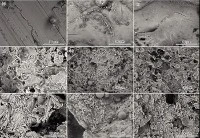
Uniform corrosion occurs on the surface of titanium samples or workpieces, forming a layer of corrosion products with uniform thickness, tightly attached to the titanium surface, and generally does not expand inward with time, but there are exceptions. In many corrosive media, the corrosion performance of titanium is as good or better than that of other metals with protective layers. The corrosion of titanium is usually electrolytic, so there is a certain relationship between corrosion and electrode potential and electromotive current. The anodic and cathodic polarization also has a strong influence on the corrosion mechanism and rate. The potential of titanium depends largely on the insulating properties of the oxide film. Therefore, the characteristics of the oxide film on the titanium surface play a decisive role in its corrosion resistance. All factors that can improve the compactness of the oxide film, increase the thickness of the oxide film, and improve the insulating properties of the oxide film are all conducive to the improvement of corrosion resistance. On the contrary, any factor that reduces the effective protection ability of the oxide film, whether it is mechanical or chemical, will make the corrosion resistance of titanium drop sharply.
2. Local corrosion
The corrosion of titanium under most conditions is local in nature, and the degree of corrosion at one point is quite different from that at another point. Crevice corrosion, cavitation corrosion, stress corrosion cracking, etc. are localized corrosion. Crevice corrosion mostly occurs at flanges or folds and in crevices near deposits, and it will not occur if the crevice is too small or too large. Cavitation corrosion is a kind of corrosion that occurs in the opening, and it is easy to occur in the presence of CI-, Br-, and I-plasma. Stress corrosion cracking is a kind of corrosion that occurs when the workpiece or sample is under the combined action of tensile stress and a corrosive environment.
3. Abrasion
The corrosion form of the sample or workpiece in the corrosive flowing medium, due to the mechanical action of the fluid, corrosion is accelerated, because the fluid can take away part or all of the corrosion products, expose new surfaces, and accelerate corrosion.
Dissimilar metal contact corrosion is also called galvanic corrosion. In a corrosive environment, two metals or structural parts with different potentials are placed. In the case of an electrical short circuit, the metal with a low potential will corrode.

4. Suck H2 or H2 Crisp
Under normal conditions, titanium and titanium alloys always contain H2. If H2 is extracted from the material, when the extraction amount exceeds the solid solution limit, brittle hydrides will be formed, resulting in hydrogen embrittlement.
Under most conditions, the corrosion of titanium and titanium alloys is local in nature, and at the same time, the degree of corrosion at one point is very different from that at another point. Therefore, the quantitative evaluation of corrosion can only be based on a large number of statistical materials, rather than the results of a few samples. Another serious problem in evaluating corrosion is what is the standard. Mass loss is rarely used, and the degree of corrosion is mostly judged based on strength loss, surface appearance changes, or perforation. In general, the corrosion process of titanium and titanium alloys is slow. Unless you are completely unsuitable for the conditions in which you are. In order to correctly evaluate the performance of titanium, it usually takes dozens of days or even several years of tests. In many occasions, titanium and titanium alloys corrode quickly at the beginning, then slow down, and only weak corrosion often occurs in the end. However, in some cases, the titanium alloy will change after a period of time, and the structure and performance will change drastically. Therefore, short-term use tests are not completely reliable. There are many rapid-use test methods, but in general, the faster the test, the lower the reliability of the results.
Titanium is one of the most thermodynamically unstable metals. Its standard electrode potential is -1.63V, and the surface is always covered with a thin and dense TiO2 film. Therefore, the stable potential of titanium and titanium alloys tends to be positive. For example, titanium is in the stable potential in seawater at 25°C is about 0.09V. Electrode potentials are mostly calculated from thermodynamic data, and different data may appear due to different data sources, which is normal.
The surface of titanium and titanium alloys always has a thin layer of oxide film that is naturally formed in the air. Its excellent corrosion resistance comes from the existence of a stable, strong adhesion and good protection oxide film on the surface. . The corrosion resistance of this protective film can be expressed by the P/B ratio. Only when the P/B value is greater than 1 can it be protective. Otherwise, the corrosion resistance will be low, but it should not be greater than 2.5. If it is greater than this value, the compressive stress in the oxide film will increase, which will easily cause the oxide film to rupture and the corrosion resistance will decrease. , the best value is 1~2.5.
Titanium will immediately form an oxide film in the atmosphere or aqueous solution. The thickness of the film formed in the atmosphere at room temperature is 1.2nm~1.6nm, and it will increase with time. It will increase to 5nm after 70 days and 8nm~9nm after 545 days. . Artificially strengthened oxidation conditions, such as heating, adding oxidants or anodic oxidation, etc., can accelerate oxidation, increase film thickness, and improve corrosion resistance.
The oxide film on the surface of titanium and titanium alloys is generally not a single structure, and its composition and structure are related to the formation conditions. Usually, the interface between the oxide film and the environment is mostly TiO2, and the interface between the oxide film and the metal may be dominated by TiO2, while the middle is a transition layer of different valence states, or even a non-stoichiometric oxide, which means titanium and The surface oxide film of titanium alloy is a complex multi-layer structure. As for their formation process, it cannot be simply understood as the direct reaction of Ti and O2. Some researchers have proposed various formation mechanisms. Russian scholars believe that hydrides are formed first, and then a pure oxide film is formed on the hydrides.


