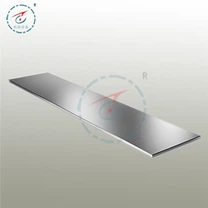
Titanium-copper composite rod is a metal composite titanium material with a certain thickness (generally 1.0~1.2mm) of titanium layer wrapped around the circumference of the copper rod, which is divided into round, flat, square, rectangular, and drum-shaped according to its cross-sectional geometry.
This composite titanium material combines the excellent electrical conductivity of copper and the excellent corrosion resistance of titanium into one and can be used as a conductor carrying high currents under highly corrosive working conditions while ensuring uniform consistency of current density and eliminating the contamination of electrolyte due to corrosion of copper conductors. Therefore, titanium-copper composite rods have become the main component for making metal anode electrolytic cells, and have been rapidly developed in countries around the world since their introduction in the 1960s.
The production method of titanium clad copper rods
The simple mechanical assembly or casting and filling method cannot meet the large lamination rate and high lamination strength of titanium-copper composite rods. The National Standard of the People's Republic of China: Titanium-Copper Composite Bar (GB/T 12769-2003)" stipulates four production methods of titanium-copper composite bar: hot extrusion method, hot extrusion + stretching method, explosion method, explosion + rolling method.

The titanium-copper composite bar manufactured by the hot extrusion method has high strength, good composite fastness, and is not easy to appear titanium-copper separation; however, the surface roughness of the bar is poor, and the bending resistance is low. Extruded bars and then after a certain cold stretching, the surface roughness is improved, bending resistance is improved, and the dimensional accuracy of the product can also be improved. Therefore, the current market of titanium-copper composite rods is mainly produced by the hot extrusion + stretching method.
Explosion method is the first copper rod into the titanium tube, in the titanium tube around the evenly placed on the explosive, detonated with a detonator explosives so that the copper rod and titanium tube in the role of explosive force to form a composite. But this method of low production efficiency, high cost, and the current industrial production of the basic no one use this method.
The explosion + rolling method is the use of a larger size of titanium and copper bar, the explosion method into a billet, and then use the hole rolling method made of the composite bar. This method is more efficient than the direct explosion method, and has lower cost, but less suitable for mass production, and can only produce rectangular and flat bars, for the use of this method is suitable for other shapes of titanium and copper composite bar production still need to be further explored.
Baoji Taicheng Clad Metal Materials Co., Ltd is a professional manufacturer of metal composite materials, which can provide you with the best titanium copper composite rods. Our company is experienced in production and our products are exported to many overseas countries. If you have any relevant needs or questions, welcome to consult!