

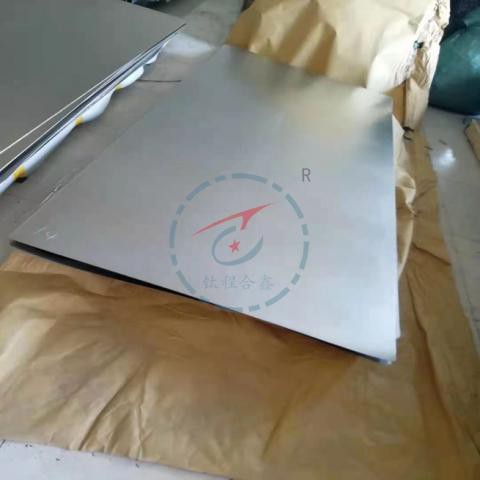
Titanium sheets are metal plates that are made from titanium, an incredibly strong and lightweight metal. Titanium is known for its durability, strength, and corrosion resistance, making it an ideal material for a variety of applications. It is also non-magnetic, non-toxic, and has a high melting point. Titanium sheets are often used in aerospace, automotive, and medical applications, as well as for industrial purposes.
Warm resistance
Another compelling factor to choose titanium sheets is their excellent warmth resistance. Titanium can endure heats without losing its stamina or structural integrity. This building makes it ideal for applications including extreme heat, such as warm exchangers, exhaust systems, as well as power generation tools.
Lightweight high strength
Titanium sheets possess exceptional strength and hardness while being relatively lightweight. This makes titanium sheets an ideal choice in manufacturing, particularly in sectors that require a balance between strength and weight.
Corrosion resistance
Titanium sheets exhibit excellent corrosion resistance, enabling them to maintain their original state for extended periods, even in harsh environmental conditions. This widespread corrosion resistance makes titanium sheets widely applicable in chemical industries, marine engineering, shipbuilding, and more.
Excellent malleability
Titanium sheets have outstanding malleability and processability, allowing them to be easily cut, bent, and shaped into various forms. This provides the manufacturing industry with greater design freedom and flexibility to meet the demands of complex components.


Advanced equipment
We have 50 sets of Grinding & polishing machine, 2 sets of Automatic polishing Machine, 1 set of TianDuan 1600ton oil press machine, 1 set of Thirteen roller straightener etc.
Our honor and patents
We have obtained 1 national invention patents and 17 utility model patents, and was recognized as a high-tech enterprise by Shaanxi Provincial Science and technology department.
Rich experience
Founded in 2005, after more than ten years of hard work and development, it has many subsidiaries.
Rich production experience
The company has two complete metal composite production lines: explosive cladding and explosion with rolling, with an annual production capacity of 50000 tons.
Titanium sheets is a metal in group IVB of the periodic table with atomic number 22, an atomic weight of 47.90, a density of 4.54 Mg/m3, and a melting point of 1670 C. This melting point is approximately 400°F (220°C) above the melting point of steel and approximately 2000°F (1100°C) above that of aluminum.
How do Titanium Sheets Compare to Steel Sheets?
Titanium sheets is significantly stronger than steel sheets, making it excellent for high-stress applications such as airplane building. Titanium sheets provides higher strength per unit mass, but steel sheets remains the superior choice in terms of total strength. Titanium sheets is perfect for circumstances requiring strength and lightness, which is why it’s commonly used in high performance automobile and aerospace designs. Steel sheets is a logical choice when only strength is required, but titanium sheets is suitable when both strength and weight are a factor.
Used due to unique combination of high strength, light weight, corrosion resistance, biocompatibility, and higher temperature performance. Some titanium sheets can be as thick as 150mm or even more while the thinnest plates measure around 2mm thick. Titanium sheets, on the other hand, can often be less than 1mm thick. However, there can be some crossover between the two types, with some titanium sheets reaching 25mm in thickness. Often, titanium sheets are custom-fabricated, while sheets may be cut from a continuous roll .
How to Determine Strength
● Tensile strength tests measure the maximum load the metal can withstand before breaking.
● Yield strength tests measure the stress at which the metal yields and permanently deforms.
● Hardness tests measure the metal's resistance to plastic deformation by determining the depth of the indentation in the metal surface.
Laser cut titanium
Laser cutting machines can also be used to cut titanium sheets. This process uses a combination of nitrogen and oxygen in a carbon dioxide laser. This process can also cause the metal substrate to burn. Therefore, professional metal fabricators are needed to optimize gas combinations to provide superior surface results.
Plasma cutting titanium
Plasma cutting torches or plasma CNC machines can also use specialized gases to cut titanium sheets. This process uses argon and nitrogen. Argon provides better accuracy, while nitrogen increases cutting speed.
Waterjet cutting
Using waterjet to cut titanium sheets is a very efficient process. It can cut titanium blocks up to 8 inches thick (softer materials like aluminum can cut up to 12 inches). This cutting thickness is far superior to any other technology such as laser or plasma cutting.
CNC machine cutting
Computer CNC machines are also suitable for this process. The machine can be easily and safely programmed to cut titanium sheets and thin sheets. Tuofa's operators use unique techniques, angles and speeds to ensure damage-free cuts.
Titanium sheets is not magnetic. This is because titanium has a crystalline structure with no unpaired electrons, which are required for a material to exhibit magnetic properties. This means that titanium does not interact with magnetic fields and is considered to be a diamagnetic material.
Titanium grade 1: As the softest, most ductile commercially pure titanium grade, this is particularly easy to work with thanks to its excellent formability. Its high corrosion resistance makes it especially well-suited to marine and chemical processing applications. Grade 1 titanium is also able to withstand high-impact environments.
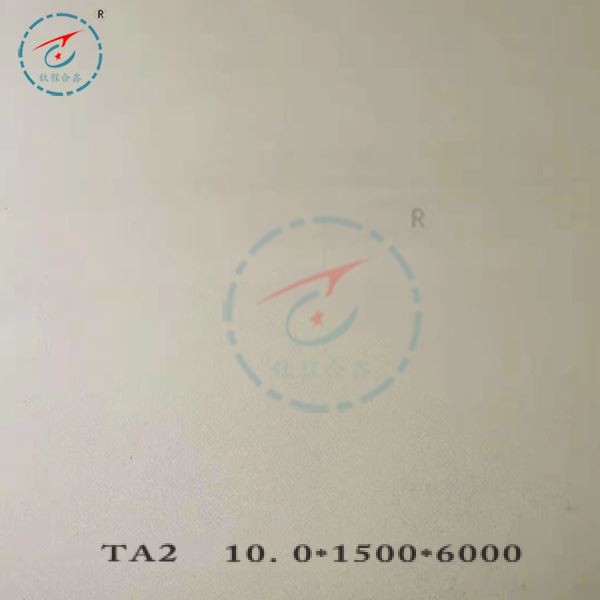
Titanium grade 2: The most widely available and versatile pure grade, this type of titanium is slightly stronger than Grade 1 and is often used in medical and architectural applications, as it can be easily formed and welded.
Titanium grade 3: While less formable than Grades 1 and 2, commercially pure Grade 3 has higher strength and Grade 3 is used less frequently than Grades 1 and 2 but is ideal for applications requiring moderate strength and high corrosion resistance, such as medical and aerospace projects.
Titanium grade 4: The strongest of the commercially pure, unalloyed grades, this material is also highly formable and weldable, as well as corrosion resistant. It’s commonly used in industries that require high strength, such as aerospace and medical.
Titanium grade 5: Also referred to as Ti6Al4V, Ti-6Al-4V, & or & Ti 6-4, this is the most popular titanium alloy, accounting for half of all titanium use worldwide. Aside from titanium, Grade 5 composed of aluminum, vanadium, iron, and oxygen. High-strength but lightweight, this alloy has good formability, superior toughness, and high corrosion and creep resistance.
Titanium grade 6: This grade, also referred to as Titanium 3Al-2.5V, is exceptionally resistant to corrosion. While not as strong as Grade 5, this material is still useful in aerospace and industrial applications given its light weight and greater resistance to high temperatures.

Titanium sheet is a metal plate made of titanium. It also has high corrosion resistance, making it suitable for use in humid or corrosive environments. Titanium sheets also have excellent fatigue resistance, meaning they can withstand a lot of wear and tear without breaking.
Hot forging is a forging process that takes place above the recrystallisation temperature of the metal. Hot rolling is a rolling process that takes place above the recrystallisation temperature. Cold rolling is a rolling process in which the plastic deformation temperature is lower than the recovery temperature. Annealing: A metal heat treatment process in which the metal is slowly heated to a certain temperature, held for a sufficient time, and then cooled at a suitable rate (usually slow, sometimes controlled cooling). Pickling: The immersion of a manufactured part in an aqueous solution of sulphuric acid, etc., to remove thin films such as oxides from the surface of the metal. It is a pre-treatment or intermediate treatment for electroplating, enamelling, rolling and other processes.
Automotive
Titanium sheet is often used in the automotive industry, particularly in the production of racing cars. It is also used in the manufacture of car and bike parts, such as exhaust systems, due to its resistance to corrosion.

Aerospace
As titanium is strong yet lightweight, it is the perfect material for use in the aerospace industry. It is used extensively in aircraft construction and has even been used in the construction of space satellites.

Architecture
Titanium sheet can also be used in architecture, particularly for cladding purposes. It gives buildings a modern look and feel and can also help to protect against the elements.
Medical
Titanium is an important material in the medical industry due to its ability to withstand high temperatures and its non-toxic nature. It is often used in the production of implants and other medical devices.
Depending on the application, and required coating characteristics, surface treatments that address cracking and the high coefficient of friction, galling, and corrosion/oxidation, are recommended. Ideally, the treatment will enhance titanium sheets life-span and improve the product's performance in situ.
Regular cleaning
Titanium sheets accumulate dirt, dust and other contaminants over time, which can affect their appearance and performance. It is recommended that titanium sheets be cleaned with a mild soap or detergent and warm water. Avoid using abrasive cleaners or scouring pads as they can scratch the surface of the titanium sheet.
Keep the titanium sheet dry
After cleaning, rinse the titanium sheet thoroughly with water and then dry it with a soft cloth to prevent water damage. Try to prevent the titanium plate from being affected by moisture.
Avoid contact with chemicals
Although titanium is highly resistant to corrosion, certain chemicals, such as strong acids and bases, can still cause damage. If contact with these chemicals is unavoidable, it is recommended that the titanium sheet is rinsed immediately with plenty of water to minimise potential damage.
Avoid strong impact
When transporting or storing titanium sheets, avoid dropping or hitting them on hard surfaces and use protective covers or pads. Also, avoid using sharp or abrasive tools on titanium sheets as they can cause scratches or dents.
Environmental humidity control: When storing titanium sheets, attention should be paid to the ambient humidity. Generally, the relative humidity is required to be between 40% and 60%. Avoid storage in humid places or high-humidity environments.
Temperature control: When storing titanium sheets, attention should be paid to the ambient temperature. It is best to control it at around 20°C and avoid storage in high or low temperature environments.
No exposure to sunlight: When storing titanium sheets, avoid direct sunlight or strong light exposure to avoid affecting the quality and lifespan of the titanium sheets surface.
Avoid extrusion and collision: When storing titanium sheets, avoid extrusion, collision, etc. to prevent surface scratches or deformation.
Can Titanium Sheets be Painted or Coated?
Since titanium sheets has excellent corrosion resistance it rarely has a surface finish applied just for corrosion protection. Sometimes it might have an anodize finish or a dry film lube coating applied for improved wear properties. You will need to use some type of etching primer when painting titanium sheets.


Taicheng Group specializes in R & D, production and deep processing of layered metal composites, titanium and titanium alloy series metal materials. The company has two complete metal composite production lines: explosive cladding and explosion with rolling, with an annual production capacity of 50000 tons.


As one of the most professional titanium sheet manufacturers and suppliers in China, we're featured by quality products and competitive price. Please rest assured to buy or wholesale customized titanium sheet made in China here from our factory. Contact us for quotation and pricelist.
Hot Rolled ASTM Pure Titanium Sheet, Industry Medical Grade7 Titanium Plate, Astm265 Grade 5 Titanium Plate(0/10)

