

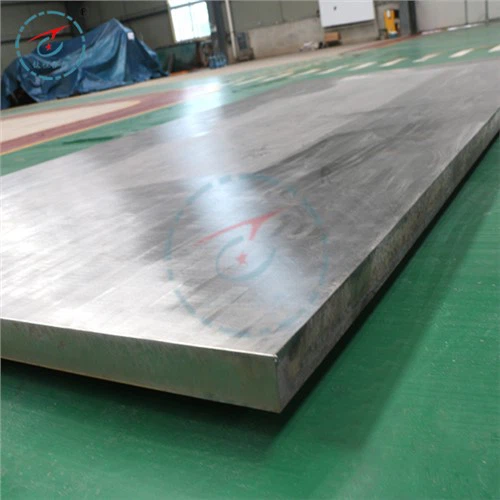
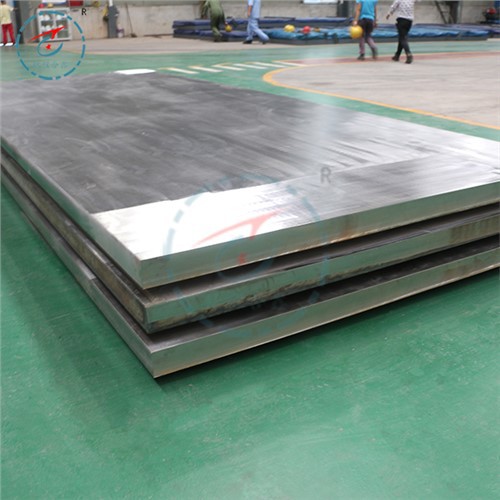
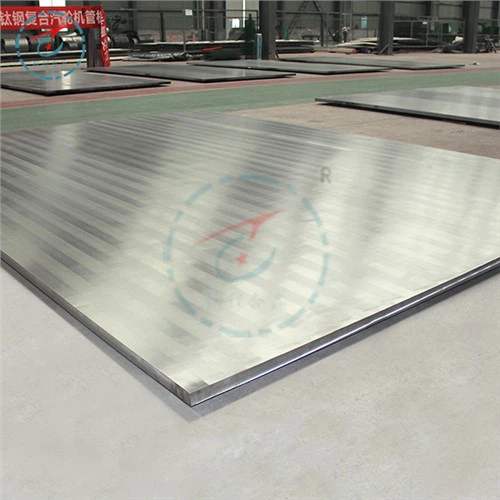
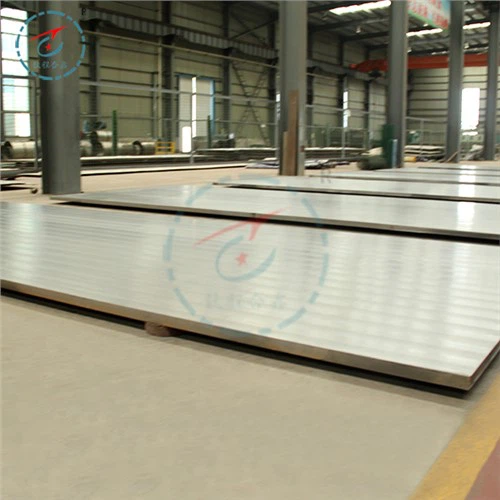
Stainless steel clad plates, also known as clad metal plates or bimetallic plates, are composite materials composed of two layers of different metals bonded together. The primary purpose of using stainless steel clad plates is to combine the beneficial properties of both materials for enhanced performance. And ensure its good strength, toughness, bending and tensile, and impact resistance.
Corrosion resistance
Stainless steel is renowned for its excellent corrosion resistance, making it suitable for environments where corrosion is a concern. By using a stainless steel cladding layer, the clad plate can provide superior corrosion resistance to the base material, extending the lifespan of the component.
Strength and toughness
The base material of the clad plate, such as carbon steel, provides high strength and toughness, while stainless steel contributes to its corrosion resistance. This combination of properties makes stainless steel clad plates strong, durable, and resistant to deformation or fracture.
Cost-effectiveness solution
By using a thinner layer of stainless steel as cladding on a thicker and less expensive base material, the stainless steel clad plate offers a cost-effective solution for applications requiring corrosion resistance.
Heat resistance
Stainless steel clad plates can exhibit improved heat resistance due to the stable and high-temperature properties of stainless steel. The clad plate can withstand high temperatures without deformation or loss of mechanical properties.
Versatility
Stainless steel clad plates can be tailored to meet specific requirements by selecting different base and cladding materials. This allows customization based on factors such as corrosion resistance, strength, conductivity, thermal expansion, and more.





Advanced equipment
We have 50 sets of Grinding & polishing machine, 2 sets of Automatic polishing Machine, 1 set of TianDuan 1600ton oil press machine, 1 set of Thirteen roller straightener etc.
Our honor and patents
We have obtained 1 national invention patents and 17 utility model patents, and was recognized as a high-tech enterprise by Shaanxi Provincial Science and technology department.
Rich experience
Founded in 2005, after more than ten years of hard work and development, it has many subsidiaries.
Rich production experience
The company has two complete metal composite production lines: explosive cladding and explosion with rolling, with an annual production capacity of 50000 tons.
The yield strength of stainless steel clad plate is high, above 280MPa. The yield strength of pure stainless steel plate is 190MPa, and that of aluminum alloy is 90MPa. The stainless steel composite plate has good corrosion resistance and better economic benefits.

● The hardness of the stainless steel composite plate is high and durable, and the thermal conductivity is high, which is 3 times that of stainless steel.
● The surface is covered with stainless steel, which has the gorgeous appearance of stainless steel. If you put it together with pure stainless steel, there is no difference.
● The advanced rolling process brazing method conforms to the process to form atomic bonds between different materials.
● The stainless steel composite plate is firmly compounded, and is fused together by high temperature and high pressure to form an interatomic bond without delamination.
● Good processing performance, can withstand repeated bending, shearing, punching and other processing without delamination and cracking.
● The elongation is high, and the base layer is made of impact steel, which can withstand greater deformation and has high elongation.
Detection Methods for Stainless Steel Clad Panels
Metallographic testing
Metallographic testing is mainly to understand the properties and performance of stainless steel clad plate materials by observing and analyzing the microstructure and metallographic structure of stainless steel clad plates.
Chemical composition testing
Chemical composition testing can analyze and detect the main components of stainless steel clad panels to understand the material properties and composition of stainless steel clad panels.
Mechanical performance testing
Mechanical performance testing mainly tests the tensile, bending and other mechanical properties of stainless steel clad panels to determine the material strength and toughness of stainless steel clad panels.
Although the stainless steel clad panel itself has a certain degree of waterproofness, it still needs to be waterproofed during actual use. This can be achieved by applying waterproof paint. However, it should be noted that before applying waterproof coating, the stainless steel clad panel needs to be pre-treated, including surface cleaning, grinding, sandblasting, rust removal, etc. This can effectively improve the adhesion and waterproofness of the paint.
Stainless steel clad panels feature a stainless steel cladding layer bonded to a base metal substrate, offering excellent corrosion resistance and durability. In contrast, other clad panels may utilize different cladding materials such as aluminum, copper, or titanium, each providing distinct properties and advantages. While stainless steel clad panels excel in environments requiring corrosion resistance, other clad panels may offer benefits such as lightweight construction, enhanced conductivity, or specific aesthetic qualities depending on the application requirements.
Material of Stainless Steel Clad Plates
Stainless Steel Clad Plate is joint by carbon steel(base material) and stainless steel(clad material),which forms a kind of alloy-integrate of carbon steel and stainless steel. The bonding process, often achieved through methods such as explosion welding or roll bonding, creates a metallurgical bond between the two materials, ensuring optimal adhesion and durability.
Petrochemical and chemical industry
In environments where corrosive substances are prevalent, such as petrochemical plants and chemical processing facilities, stainless steel clad plates serve as a reliable solution. They provide a barrier against aggressive chemicals and corrosive agents, ensuring the integrity of equipment and reducing maintenance costs.
Power generation
In the power generation sector, where heat and pressure are constants, stainless steel clad plates find their place. They are used in the fabrication of pressure vessels, heat exchangers, and boilers, offering exceptional resistance to both high temperatures and corrosive environments.
Oil and gas industry
Stainless steel clad plates play a pivotal role in the oil and gas industry, where equipment is subjected to extreme conditions, including exposure to seawater and harsh weather. These plates provide a robust defense against corrosion, prolonging the lifespan of crucial components in offshore platforms, pipelines, and storage tanks.
Aerospace and defense
In the aerospace and defense sectors, stainless steel clad plates are employed in the manufacturing of aircraft components, tanks, and military vehicles. Their ability to withstand mechanical stress, high-speed impacts, and corrosive agents makes them an essential material for ensuring safety and performance.

Machining Methods for Stainless Steel Clad Plate
Explosive clad
Overlap stainless plate on carbon steel plate with a cushion in middle to leave certain space.Explosive material will be paved on the surface of stainless plate and when explosive material exploding,high energy can make stainless plate impact carbon steel plate with high speed to joint.In ideal condition,the strength for square mm could reach 400 MPA. Thickness Scope:10mm-300mm.
Hot rolled clad
Hot rolled stainless steel clad plate is rolled of stainless and carbon steel plates in vacuum condition.In such process,the clad plate and base plate should be in pure clean condition.Besides,for improving the strength of conbining,there are also a series of technical methods with physics and chemical treatments. Thickness Scope:0.6mm-50mm.
Cold rolled clad
Cold rolled Stainless clad plate is made after annealing-pickling-cold rold-mid annealing-pickling production process to stainless steel clad plates.This material is with better yield strength than same grade stainless plate.Min thickness would reach 0.6mm.
Stainless steel clad plates consist of two layers: a base metal layer and a cladding layer. The base metal layer provides structural support and may be made of carbon steel, low alloy steel, or other metals, depending on the application requirements. The cladding layer, typically made of stainless steel, is bonded to the base metal layer using processes such as explosion welding or roll bonding.
Regular cleaning: Stainless steel clad plates should be cleaned regularly to remove dirt, dust, and grime. Use a mild detergent or soap and warm water, and a soft cloth or sponge to wipe down the surface. Avoid using abrasive materials, such as steel wool or abrasive cleaning pads, as these can scratch the surface.
Avoid harsh chemicals: Harsh chemicals, such as bleach and ammonia, can damage the surface of stainless steel clad plates. Instead, use mild cleaning products or specialized stainless steel cleaners.
Dry thoroughly: After cleaning, be sure to dry the stainless steel clad plates thoroughly to avoid water spots and streaks. Use a clean, dry cloth to buff the surface.
Prevent damage: Avoid exposing stainless steel clad plates to harsh chemicals, extreme temperatures, and abrasive materials. Use protective pads or mats under appliances, and avoid placing hot or sharp objects directly on the surface.
Polishing: Stainless steel clad plates can be polished to restore their shine and remove any scratches or stains. Use a specialized stainless steel polish and a soft cloth to gently buff the surface.
Warehouse storage
Determine the ambient temperature of the warehouse. Generally, the temperature is required to be above 5 degrees to prevent the boards from getting wet and exposed. They need to be stored in categories, with different types of plates on different stacks and separated by backing boards or wooden boards to prevent collisions and scratches. When storing, you need to handle it with care and avoid over-stacking or placing it at an angle to avoid deformation of the plates.
Loading and transportation
Stainless steel clad panels also require special attention when loading and transporting. During the loading process, plastic paper or air cushion film should be used to wrap the panels to prevent the clad panels from directly contacting the vehicle or other items, causing scratches or damage. After being securely fixed, it can be transported to the destination.
Construction site placement
Determine the placement location and direction, and then use a hoist or forklift to place the clad panels at the designated location. When placing, it is necessary to pay attention to the distance between the stainless steel clad panel and the surrounding environment to avoid collisions or accidents. If processing or treatment is required on the surface of the stainless steel clad plate, the plate must be cleaned first to ensure that the surface is clean and tidy.
Avoid cracks and leaks
During the welding process of stainless steel clad plates, cracks and leaks should be avoided, especially when welding at high temperatures or high speeds. You should always check whether the welding gap is tilted, shrunk or deformed, and take timely measures to avoid cracks and leaks. .
Keep the welding area clean
Stainless steel clad panels are prone to contamination during the welding process, so the welding area needs to be kept clean. Before welding, the welding area should be treated and surface dirt removed with a wire brush to ensure welding quality.
Ensure the quality of tungsten electrodes
Tungsten electrode is a very critical part in TIG welding. When welding stainless steel clad plates, it is necessary to ensure that the quality of the tungsten electrode is stable and meets the requirements to avoid excessive wear, bending or oxidation.


Taicheng Group specializes in R & D, production and deep processing of layered metal composites, titanium and titanium alloy series metal materials. The company has two complete metal composite production lines: explosive cladding and explosion with rolling, with an annual production capacity of 50000 tons.


As one of the most professional stainless steel clad plates manufacturers and suppliers in China, we're featured by quality products and competitive price. Please rest assured to buy or wholesale customized stainless steel clad plates made in China here from our factory. Contact us for quotation and pricelist.
nickel plated stainless steel, UNS S32205 Stainless Steel Clad Steel Plate, SS316L Stainless Steel Clad Steel Plate tube sheet(0/10)

