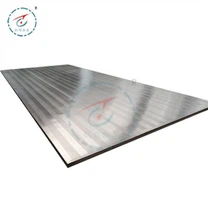
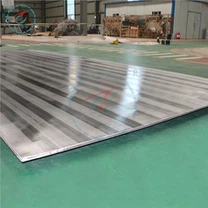
As early as the early 1980s, stainless steel composite materials were first used in the aerospace field, mainly for the manufacture of aircraft transmitters and other components. With the continuous development of science, stainless steel composite materials have also entered the daily lives of ordinary people. Now our daily life Many household appliances in China are also inseparable from this material. This material not only has corrosion resistance and oxidation resistance but also greatly reduces the cost and improves the service life.
Stainless steel composite materials offer several advantages over other materials, including:
1. Corrosion resistance: Stainless steel is known for its excellent resistance to corrosion. When used as a composite material, it can provide even greater protection against rust and other types of corrosion.
2. High strength-to-weight ratio: Stainless steel composite materials can be designed to have a high strength-to-weight ratio, making them ideal for applications that require both strength and lightweight.
3. Durability: Stainless steel is a highly durable material, and when used as a composite material, it can offer even greater durability.
4. Ease of fabrication: Stainless steel composite materials can be easily fabricated using standard metalworking techniques, making them a cost-effective option for many applications.
5. Sustainability: Stainless steel is a highly recyclable material, which means that stainless steel composite materials can be recycled at the end of their useful life.

Stainless steel composite materials also have disadvantages, because the processing methods and production of many special industries are extremely complicated, especially in the petroleum and chemical industries. It also needs to achieve better corrosion and oxidation performance under the erosion of the environment's climate and strong corrosive liquids. Most of the stainless steel composite materials used in our daily life are 304 stainless steel, and its processing and production methods are much simpler.
While stainless steel composite materials have many advantages, they also have some disadvantages to consider:
1. Cost: Stainless steel composite materials can be more expensive than other materials, such as aluminum or steel.
2. Conductivity: Stainless steel is a good conductor of heat and electricity, which can be a disadvantage in certain applications.
3. Magnetism: Some types of stainless steel are magnetic, which can be a disadvantage in applications where magnetism is not desirable.
4. Surface finish: Stainless steel composite materials can be difficult to finish or coat due to their smooth and non-porous surface.
These are the advantages and disadvantages of stainless steel composite materials. I hope that regular maintenance and maintenance can improve its service life. Although the annual production of this material in China is increasing significantly, due to the complicated refining process, the price still very expensive.
Baoji Taicheng Clad Metal Materials Co., Ltd is a stainless steel clad plates manufacturer, which can provide you with customized services, 24-hour online customer service, welcome to consult and cooperate!