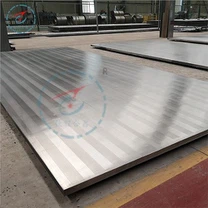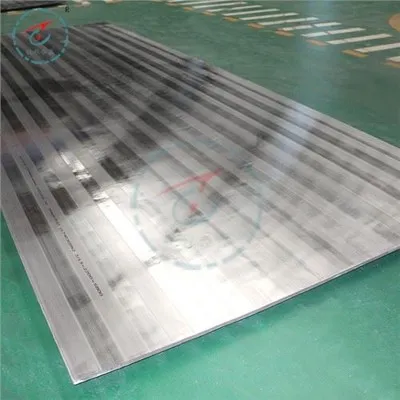

Titanium alloy material has the characteristics of high specific strength, good mechanical properties at medium temperature, corrosion resistance, non-magnetic, and good welding performance. It is an important new metal structural material and is widely used in various fields. The density of titanium alloy is generally 4.51g/cm3, which is only 60% of steel, but its strength is comparable to that of armor steel. Some high-strength titanium alloys even surpass the strength of many alloy structural steels, and their toughness is better than that of aluminum alloys. Because its specific strength is much greater than other metal structural materials, it can produce parts and components with high unit strength, good rigidity, and lightweight. Even in the humid atmosphere and seawater medium, the corrosion resistance of titanium alloy is far superior to that of stainless steel, and it also has excellent corrosion resistance to corrosive substances such as alkali, chloride, acid, etc., especially for pitting corrosion, acid corrosion, Stress corrosion resistance is particularly strong.
The body of an armored vehicle occupies a large part of the weight of the entire vehicle, and its weight is related to the vehicle's ability to act on the battlefield and has a great impact on its battlefield survivability. Even though titanium alloy has the advantages of lower density than steel and stronger strength than structural steel, its cost is about 10 to 20 times higher than that of steel armor with the same protective performance, so titanium alloy has not been widely used in the car body, only in special A small number of applications are carried out as needed.
The protective performance of titanium alloy armor is 30% to 40% better than that of homogeneous steel armor of the same weight. However, due to the constraints of current production technology, and the demand for armor is large, the manufacturing cost of titanium alloy armor is relatively expensive, which limits its size. application of the scope.
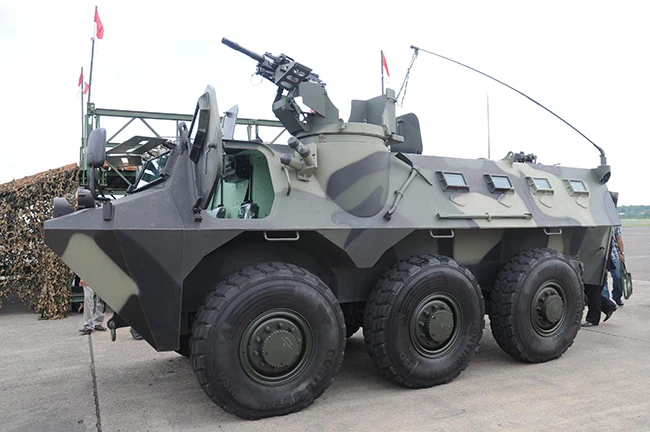
The body of an armored vehicle occupies a large part of the weight of the entire vehicle, and its weight is related to the vehicle's ability to act on the battlefield and has a great impact on its battlefield survivability. Even though titanium alloy has the advantages of lower density than steel and stronger strength than structural steel, its cost is about 10 to 20 times higher than that of steel armor with the same protective performance, so titanium alloy has not been widely used in the car body, only in special A small number of applications are carried out as needed.
The protective performance of titanium alloy armor is 30% to 40% better than that of homogeneous steel armor of the same weight. However, due to the constraints of current production technology, and the demand for armor is large, the manufacturing cost of titanium alloy armor is relatively expensive, which limits its size. application of the scope.
The United States uses titanium alloys for the M1 tank to manufacture seven parts including the rotating turret plate, the nuclear, biological, and chemical weapons countermeasure system cover, the command hatch cover, and the gunner's main sight cover, which reduces the weight of the turret by 475kg and has better protection capabilities.
Titanium alloy materials are gradually used in the manufacture of car bodies, armor, and turret due to their superior performance. At the same time, the use of titanium alloys to manufacture road wheels, balance shafts, gearboxes, and other components is gradually being explored at home and abroad. Titanium alloys will be armored vehicles. Manufacturing materials are important application directions.