
As the global commercial aviation market continues to recover,the aviation sector keeps driving steady growth of the titanium industry.Overseas enterprises are ramping‑up capacities for high‑grade sponge titanium as well as green titanium metallurgy technologies,bringing about a new landscape of structural differentiation in the global titanium‑material market.
On the aviation application side,orders for premium aerospace titanium materials remain robust.Sweden‑based Alleima has signed a long‑term cooperation agreement with Airbus to expand production of seamless aerospace titanium tubes for critical piping of aircraft fuel,hydraulic and oxygen systems.Driven by strong market demand,high‑end aerospace titanium alloys remain globally in tight supply,and the situation of long delivery lead‑times can hardly be alleviated in the short run.
On the raw‑material front,Osaka Titanium Technologies in Japan speeds up its sponge‑titanium capacity‑expansion plan.Its sponge‑titanium capacity is expected to rise from 40,000 tons to 50,000 tons by 2028 to further strengthen its supply advantages for aerospace‑grade high‑purity sponge titanium.Overseas manufacturers prioritize the aerospace‑grade raw‑material track,forming a differentiated competition pattern against domestic integrated sponge‑titanium projects.
Meanwhile,green‑titanium technology has emerged as a new competitive track.U.S.‑based IperionX keeps optimizing its low‑cost green titanium‑powder production process and has secured an R&D contract for the U.S. military titanium supply chain.The United States is accelerating the construction of its domestic titanium supply chain and vigorously developing green titanium metallurgy and 3D‑printing titanium powder. Green metallurgy and additive manufacturing have become frontier competition directions for the global titanium industry.
Comparing domestic and international industry trends,differentiation within the titanium sector is increasingly prominent. While capacities for conventional sponge titanium and standard titanium mill products keep expanding,supply gaps still exist for high‑value‑added products including aerospace‑grade titanium materials,ultra‑thin precision titanium alloys and high‑purity titanium powder.
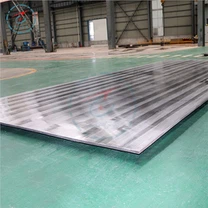
For China's titanium industry,future competition will no longer focus merely on production‑capacity scale.Product certification capability,batch‑to‑batch stability and practical deployment under new working‑condition scenarios will constitute core starting points for domestic titanium‑manufacturers to achieve breakthroughs.Going forward,we will continue to follow developments across the domestic and overseas titanium industrial chain,keep up with industry trends,deepen R&D and manufacturing of high‑performance titanium and metal‑clad plates,and deliver reliable composite‑material solutions for aerospace,offshore engineering and chemical‑processing sectors.
(The above content is compiled from online sources,for reference only.)