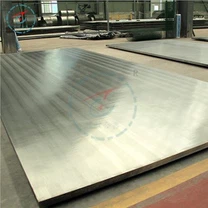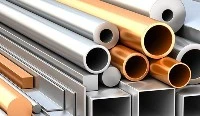


Titanium is an element with an atomic number of 22 in the periodic table. It is a subgroup element of the fourth period, that is, the IVB flag. In addition to titanium, this group of elements also includes zirconium and hafnium. Its common feature is that it has a high melting point and is on its surface at room temperature. A stable oxide film is formed.
Ten characteristics of titanium
(1) Low density, high strength, and high specific strength
(2) Excellent corrosion resistance
The passivation of titanium depends on the presence of an oxide film, and its corrosion resistance in an oxidizing medium is much better than that in a reducing medium.
(3) Good heat resistance
Titanium has a good heat resistance and is used in the disks and blades of aero-engine compressors and the skin of the rear fuselage of aircraft.
(4) Good low-temperature performance
It can be used in dry liquid hydrogen and liquid oxygen rocket engines, or as ultra-low temperature containers and storage tanks in manned spacecraft.
(5) Non-magnetic
Titanium is non-magnetic, it is used in submarine hulls and will not cause the explosion of mines.

(6) Small thermal conductivity
The thermal conductivity of titanium is small, with only 1/5 of steel, 1/13 of aluminum, and 1/25 of copper. Poor thermal conductivity is a disadvantage of titanium, but this feature of titanium can be exploited in certain applications.
(7) Low elastic modulus
The elastic modulus of titanium is only 55% of that of steel. When used as a structural material, the low elastic modulus is a disadvantage.
(8) Tensile strength is very close to yielding strength
(9) Titanium is easily oxidized at high temperature
Titanium has a strong binding force with hydrogen and oxygen, so attention should be paid to preventing oxidation and hydrogen absorption. Titanium welding should be carried out under argon protection to prevent contamination. Titanium tubes and sheets should be heat treated under vacuum, and a micro-oxidizing atmosphere should be controlled during heat treatment of titanium forgings.
(10) Low anti-damping performance
The bells are made of titanium and other metal materials (copper, steel) with the exact same shape and size. If you strike each bell with the same force, you will find that the bell made of titanium oscillates for a long time, that is, through The energy given to the bell is not easily dissipated by the striking, so we say that the damping performance of titanium is low.
Three special functions of titanium
(1) Shape memory function
It refers to the ability of Ti-50% Ni (atomic) alloy to restore its original shape under certain temperature conditions, which is called shape memory alloy.
(2) Superconducting function
It refers to NbTi alloy. When the temperature drops to close to absolute zero, the wire made of NbTi alloy will lose its resistance. When any large current passes through, the wire will not heat up and consume no energy. NbTi is called a superconducting material.
(3) Hydrogen storage function
Refers to the Ti-50% Fe (atomic) alloy, which has the ability to absorb a large amount of hydrogen. Using this feature of TiFe, hydrogen can be safely stored, that is, it is not necessary to use steel high-pressure gas cylinders to store hydrogen. Under certain conditions, TiFe can also release hydrogen, and TiFe is called an energy storage material.