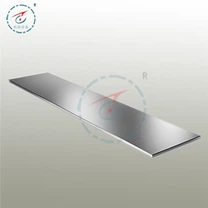
For the passivation agent of the refining system of the petroleum industry, the metal-clad plate must use relevant experiments to confirm its practicability. The experimental project has coating function, surface activity, surface solubility, reliability, anti-corrosion, and moisture index. value, continuous fluidity device experiments, etc.
All in all, the desulfurizer for metal-clad plates used in industrial production has good corrosion inhibition properties and also meets the most basic requirements. To obtain practical use, various special regulations should be directly applied.

Types of contact retarders There are many kinds of desulfurizes, and the corrosion inhibition principle is complex. There is no one and the same way to classify their effective types and harm the relationship between their molecular formula and function principle, so as to explore and be durable. It is often used in various directions. Desulfurizers are well classified.
The principle of the protective effect of desulfurizes on metal materials. It is a very important issue in the exploration of rust and corrosion resistance. The metal-clad plate does not have the same concept recognized at this stage. At this stage, there are probably the following basic theories: adsorption Basic theory, the basic theory of organic chemistry, the basic theory of coating film, synergistic effect, etc. In fact, there is an essential relationship between these basic theories. The function principle of each desulfurized depends on the type of desulfurized, organic chemical structure, metal material Therefore, in order to correctly understand the corrosion inhibition principle of metal clad plates, it is necessary to fully understand the types and dielectric characteristics of desulfurized. The corrosion process of metal materials in the electrolyte solution is composed of two common electrochemical corrosion. The difference between these two electrochemical corrosions is the cathodic hazard and the negative electrode hazard, if the desulfurized can control one or two of the cathodic and negative hazards, it can reduce the convective heat transfer coefficient.