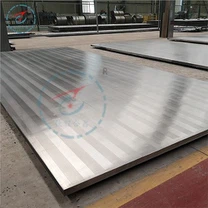
With the increasing awareness of human environmental protection and the gradual improvement of national environmental standards, especially the release and implementation of the "Emission Standards for Air Pollutants from Coal fired Power Plants" (GB13223), high polluting enterprises mainly engaged in coal combustion are being treated to reduce the sulfur content in their flue gas to the national allowed emission standards, so that China can reach the international advanced level of pollutant emissions in a relatively short period of time. New thermal power plant projects require flue gas desulfurization treatment. How to carry out anti-corrosion design for chimneys is being explored and explored by various power design institutes in order to achieve safety, reliability, durability, and economy. For steel internal structures, in the case of flue gas desulfurization (without GGH devices), the International Industrial Smokemeat Association (CICIND) recommended in its "Model Code for Steel Chimneys" (first edition in 1999) that a very thin layer of alloy or titanium plate be added to the inner side (in contact with flue gas) of ordinary carbon steel plates for treatment.
At the beginning of the century, the Electric Power Planning and Design Institute organized some technical personnel from the Electric Power Design Institute to have technical exchanges and discussions with Smith, a chimney expert from the Italian company Harmon and a director of the International Industrial Smokemeat Society. The experts believed that the use of thin titanium/steel composite plates as anti-corrosion measures for flue gas heating systems in wet flue gas desulfurization systems had a precedent in the international community and was included in the international chimney design standards.
It truly achieves the functions of structure (steel) and anti-corrosion (titanium), and leverages the advantages of each. And it can resist the corrosion effect of smoke under various working conditions, with stable smoke flow rate, good smoke diffusion effect, corrosion resistance and heat resistance, which can fully meet the long-term operation requirements of steel inner cylinder wet chimney, ensuring the service life of the smoke structure, and its manufacturing cost is not high. The use of titanium/steel composite panels on the lining of power plant chimneys has made the industry conform to the industrial structure of energy conservation and environmental protection.
Characteristics of Production Process for Titanium/Steel Clad Plate for Thermal Power Chimney
From the production situation of domestic and international clad plates, there are mainly three production processes for clad plates, namely explosive clad method, direct rolling clad method, and explosive rolling clad method.
a. The explosive composite method is a process that directly produces composite plates through explosive welding. The explosive area of the composite plates produced by this process is not very large. The more mature explosive composite material thickness must be 1.5-12mm, with an area of no more than 10.2, and the composite plates have weld seams.
b. The direct rolling composite method is a process of producing composite plates directly through the strong rolling force of a rolling mill. This process can directly produce large-area, seamless metal composite plates, but requires the selection of suitable interlayer materials, which have high technical requirements for rolling force (greater than 9000 tons), heating temperature, vacuum cleaning, and stacking methods. Currently, this process is rarely used by domestic manufacturers.
c. Explosion rolling composite method, which first produces composite rice by explosion and then heats and rolls the billet to produce composite rice. This method can obtain thin laminated metal composite plates without welding seams on the surface area, with high efficiency, stable quality, and simple process. However, the wide width rolling mill is a key equipment, otherwise it cannot be achieved.
Comparing the above three process methods, due to the special nature of the production of thin layered titanium steel composite plates, the limitations of the thickness of the composite layer and the area of the explosive plate, only the explosive rolling process can be adopted for production
Practice has proven that the production of titanium/steel composite plates for tobacco meat in power plants using explosive rolling technology is safe, environmentally friendly, and energy-saving. Firstly, there are no welding seams on the surface of the large plate composite layer. In the explosive composite process, everyone reduces the explosive area (about 20% of the finished product area), thereby reducing the amount of explosives and the production of explosive products, and reducing the impact of explosions on the surrounding environment. The rolling process meets the requirements of large-scale industrial production, and the production efficiency is significantly improved, resulting in a significant increase in output value and avoiding market, technological, and environmental risks.