Deformation and damage behavior of Cu/Al layered composite plates based on interface characteristics
Ti/Al layered composite plates, Cu/Al layered composite plates, and Mg/Al layered composite plates have excellent comprehensive properties and are widely used in aerospace, rail transit, and other fields. Cu and its alloys have advantages such as high conductivity and good formability, while Al and its alloys have excellent corrosion resistance and formability. Cu/Al layered composite plates are expected to combine the advantages of Cu and Al alloys and broaden their application prospects. However, the interface zone of laminated composite plates
The existence of Cu/Al layered composite plates makes them prone to damage during deformation, which affects the service performance of the components. It is urgent to study the damage behavior mechanism of Cu/Al layered composite plates during deformation. With the rapid development of modern industry, people's demand for the comprehensive performance of metal materials is increasing. For example, while improving the comprehensive performance of materials and pursuing lightweight, a single component material is difficult to meet the required comprehensive performance. Therefore, metal layered composite materials have emerged.
The Cu/Al composite plate with a typical layered structure combines the high conductivity and good formability of Cu with the low density and corrosion resistance of Al, and is widely used in fields such as aerospace and rail transit. The different interface morphologies and component thickness ratios of metal layered composite plates have a significant impact on the mechanical properties of the composite plates. The coordinating effect of interface elements during deformation, such as the wavy interface morphology of composite plates prepared by explosive welding. Composite plates with wavy interface morphology have higher shear strength during deformation due to the mechanical interlocking effect of each component material compared to composite plates with flat interfaces. Metal layered composite plates are prone to interface damage and failure during deformation. Currently, research on the damage of composite plates mainly focuses on experimental methods, which can intuitively study the damage behavior of materials. However, experimental methods have bottlenecks in dynamically presenting the deformation history characteristics and damage fracture behavior of metal layered composite plates at the microscale. The finite element method can establish material deformation models under actual conditions, making it possible to accurately analyze the deformation history characteristics and damage fracture behavior of layered composite plates.
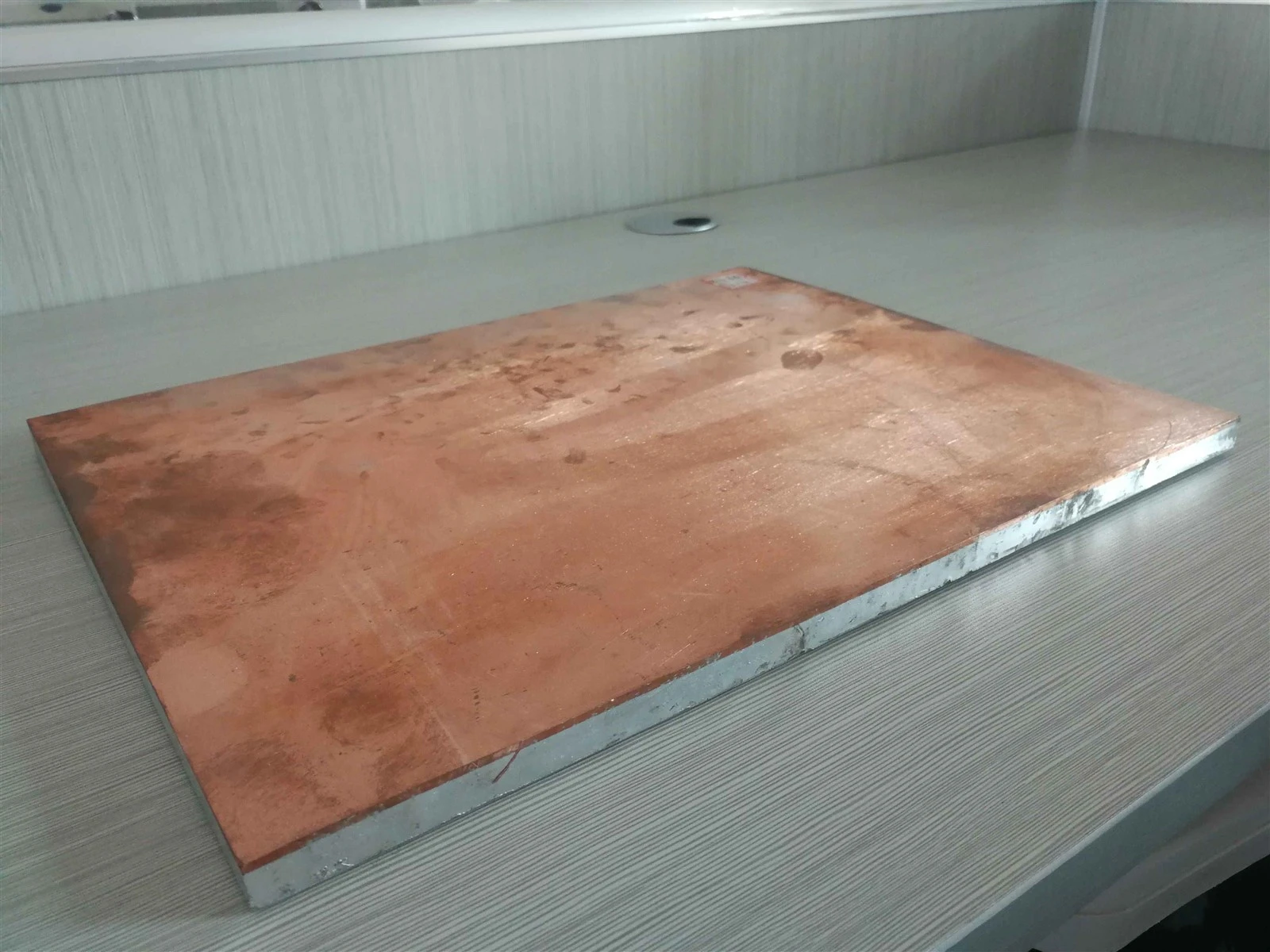
Metal layered composite plates have the advantages of comprehensive utilization of various component metals and are widely used in fields such as aerospace and rail transportation. Among them, layered configuration is the most typical method that can simultaneously improve the strength and plasticity of metal materials. It can overcome the inverted relationship between strength and plasticity and achieve a good match between the two, which has attracted much attention from scholars. The mechanical properties of intermetallic compounds in the interface zone of Cu/Al layered composite plates also differ significantly from those of the metal matrix. During the deformation process, the interface can coordinate the deformation of metals on both sides. However, due to the existence of interface characteristics, components are prone to damage and defects during cold plastic deformation, which seriously affects their safe service performance. This greatly limits their wide application and becomes a technical bottleneck. Therefore, it is urgent to conduct research on the correlation between damage behavior and damage mechanism under the constraint coordination of interface characteristics. This has become a key fundamental scientific problem that needs to be addressed in the research, development, and application of heterogeneous metal layered composite plate forming technology.
By studying the interface characteristics of Cu/Al metal layered composite plates, the damage parameters of each layer material are accurately obtained, and a finite element model of Cu/Al layered composite plates considering the influence zone of the interface is established. The crack initiation and propagation mechanism of Cu/Al layered composite plates is studied through in-situ tensile tests and finite element simulations, revealing the deformation mechanism of materials on both sides of the interface constraint coordination. The experimental results can be used to optimize the production process of Cu/Al layered composite plate components in the later stage, avoid damage to the formed parts, and improve the service performance of the formed parts. The research results not only enrich the forming technology and theory of metal layered composite plates, but also have important scientific significance for the development and improvement of component forming theory and technology.