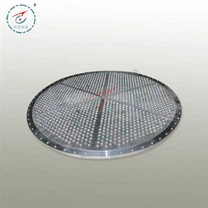
Stainless steel composite plates are particularly excellent raw materials. There is a lot of demand for stainless steel composite plates and customers in daily life. Manufacturers also attach great importance to the production and production process.
There are also many ways to polish stainless steel clad plates today, so what is the method?
The raw material has excellent leveling and high brightness; the disadvantage is that the labor efficiency is high, the damage is serious, complex parts cannot be solved, the brightness cannot maintain a relatively stable state, and the retention period is relatively short, milling and rust. It can be used to produce simple and small equipment. With less investment in production equipment, complex parts can be pulled up, faster, more efficient, and corrosion-resistant. The disadvantage is that the brightness is poor, the exhaust gas overflows, a ventilator is required, and electric heating is difficult. It can be used to produce general complexity parts and small parts with low gloss requirements. The matte finish has long brightness, relatively stable production process, low damage, low price and good corrosion resistance. The disadvantages are high energy consumption precautions, large investment in production equipment, complicated equipment, auxiliary welding and general equipment.

Since the stainless steel composite plate was put into the market, it has been widely liked by consumers. One of the reasons is that the color is very beautiful, but how is the stainless steel plate colored? There are four main methods.
1. Chemical oxidation coloring method: in a specific solution, the color of the film is formed through chemical oxidation, including the dichromate method, mixed sodium salt method, vulcanization method, acid oxidation method and alkaline oxidation method. Generally, the "Inco method" is used more, but if you want to ensure that a batch of products has the same color, you must use a reference electrode to control.
2. Electrochemical coloring method: in a specific solution, the color of the film is formed through electrochemical oxidation.
3. Chemical method of ion deposition oxide coloring method: put the stainless steel workpiece in a vacuum coating machine for vacuum evaporation plating.
4. High-temperature oxidation coloring method: in a specific molten salt, the workpiece is immersed in a certain process parameter, so that the workpiece forms a certain thickness of oxide film and presents various colors.
Baoji Taicheng Clad Metal Materials Co., Ltd. is a metal clad plate manufacturer integrating R&D, production and sales. It has three mainstream metal clad plate manufacturing processes: hot-rolled clad, explosive clad, and exploded + rolled clad. The main products include : Bimetal composite pipe, stainless steel composite plate, titanium steel composite plate, copper steel composite plate, nickel steel composite plate, tantalum steel composite plate, zirconium steel composite plate, aluminum steel composite plate, metallurgical composite steel pipe, etc.;