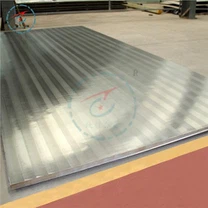
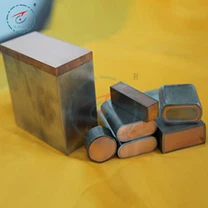
Titanium steel composite plates are a type of material used in various applications such as aerospace, marine engineering, and chemical industries. These plates are produced by bonding two or more layers of materials, with each layer having different properties, in a way that the resulting composite material possesses superior properties compared to the individual layers. The technology and process of producing titanium steel clad plates involve several steps, including material selection, surface preparation, bonding, and post-bonding processing.
1. Material Selection
The selection of materials for producing titanium steel composite sheets is crucial in determining the properties of the final product. The materials chosen for bonding should have similar coefficients of thermal expansion (CTE) and melting points to prevent any cracking or delamination of the plates during the bonding process. The most common materials used for producing titanium steel clad plates are titanium alloys and stainless steel, as they have compatible CTE values and good mechanical properties.
2. Surface Preparation
Surface preparation is a critical step in the production of titanium steel composite plates. The surfaces of the materials to be bonded should be free from any contaminants, such as dirt, grease, and oxides, which can affect the bonding strength. The surfaces are cleaned using solvents, such as acetone or alcohol, and then degreased using an alkaline solution to remove any oil or grease. After degreasing, the surfaces are rinsed with distilled water and dried using clean compressed air.

3. Bonding
The bonding process of titanium steel composite sheets involves several techniques, such as explosion welding, roll bonding, and hot pressing. The most common technique used is explosion welding, which involves sandwiching the materials to be bonded between two explosive sheets and detonating the explosives. The explosion generates high-pressure waves that create a metallurgical bond between the materials, resulting in a composite plate with excellent mechanical properties. Roll bonding is another technique used for bonding titanium steel composite plates, which involves passing the materials through a set of rollers at high temperature and pressure, resulting in a bonded composite plate.
4. Post-bonding Processing
After bonding, the composite plates undergo several post-bonding processing steps, such as heat treatment, machining, and surface finishing. Heat treatment involves annealing the composite plates to relieve any residual stresses and improve their mechanical properties. Machining is done to trim the edges of the plates and achieve the desired thickness and shape. Surface finishing involves polishing or sandblasting the surface of the composite plates to enhance their appearance and provide protection against corrosion.
In conclusion, the production technology and process of titanium steel composite plates involve several critical steps, including material selection, surface preparation, bonding, and post-bonding processing. The use of appropriate materials and bonding techniques, coupled with proper post-bonding processing, ensures that the resulting composite plates possess superior properties compared to the individual layers, making them suitable for various applications in industries such as aerospace, marine engineering, and chemical industries.
Baoji Taicheng Clad Metal Materials Co., Ltd is a titanium steel clad plates factory. If you have any questions or inquiries about titanium clad plates, feel free to ask. I'm happy to help!