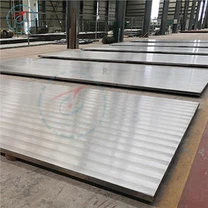
The processing and production of titanium materials began in 1954, and the production of titanium clad plates began in 1962. At that time, the processing flow of titanium composite materials mainly used the method of explosive bonding, and the two materials were firmly combined through the explosion. Later, with the improvement of technology, in the 1980s, people developed hot rolled composite methods. By the 1990s, many factories were equipped with hot rolled lines, and titanium composite materials could be put into mass production.
The advantage of titanium lies in its good corrosion resistance, so it is widely used in chemical containers and electric heat exchangers, but the disadvantage is that the cost is too high. Especially for piggy banks made in the chemical industry, the best way to save money is to use titanium clad plates. The combination of titanium and composite materials through processing is called a titanium clad plate. The birth of titanium composite material not only solves the corrosive problem but also improves the rust resistance of the material. The most attractive point is that its cost price has been reduced a lot.