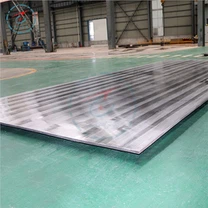
Titanium-steel clad plates combine the structural strength of carbon steel with the excellent acid-alkali corrosion resistance of titanium cladding,making them key materials for pressure vessels,reactors and heat-exchange equipment used in oil,gas and chemical industries.Nevertheless,welded joints remain high-risk weak points for equipment failure in practical projects and are critical control objects for inspection of chemical equipment.The root cause lies in the poor welding metallurgical compatibility between titanium and steel.
During direct fusion welding at high temperature,titanium and steel undergo intense metallurgical reactions and form brittle titanium-iron intermetallic compounds.These hard brittle phases lack toughness and are prone to cracking.Subjected to pressure fluctuation,alternating temperature difference and medium erosion under oil-gas working conditions, micro-cracks readily emerge,further leading to delamination,leakage or even equipment cracking.For this reason,direct fusion-welding of titanium to steel is strictly prohibited.
The reliable industrial solution adopts layered welding with isolation transition.The carbon-steel base layer is welded first for structural strength,followed by the titanium cladding.Special transition filler metals and isolation layers are applied to block inter-diffusion of dissimilar metal elements.Strict requirements are imposed on groove precision,inter-pass cleaning and heat input.Imperfect groove grinding,residual inter-layer contaminants or excessive heat input will induce brittle microstructures.
Frequent on-site fabrication hazards mostly stem from process deviations:excessive grinding-down of titanium cladding,improper selection of transition filler metals,and titanium-layer oxidation caused by insufficient shielding-gas purity.Tiny defects will rapidly propagate under high-temperature,high-pressure and corrosive oil-gas service conditions and result in joint corrosion failure.Therefore,rigorous welding-process control and standardized on-site construction are essential for long-term stable operation of titanium-steel clad-plate chemical equipment.