Titanium steel composite plate is a high-performance steel material that is rolled and combined by a composite process of base low-carbon steel and cladding titanium metal. It is currently one of the widely researched and applied composite metal profiles in the engineering field. Compared with traditional steel, titanium steel composite panels have good thermal conductivity, lower cost, and significant advantages in terms of price and market. They can improve design efficiency and reduce maintenance costs. At present, mechanical research on titanium steel composite plates has been carried out, but research on stability is still insufficient. This article is based on the compressive stability theory of titanium steel composite plates and analyzes their stability under compression.
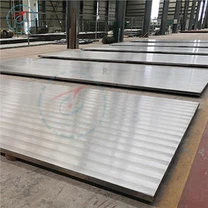
The research on titanium steel composite plates mainly focuses on the preparation methods. The current preparation methods mainly include diffusion composite method, explosive composite method, explosive rolling composite method, and rolling composite method. The diffusion composite method is mainly used to prepare small-sized welded joints, but the preparation time is long and the efficiency is low. The explosive composite method is a widely used manufacturing method with simple process, high bonding strength, and the ability to obtain corrugated interfaces. However, due to the huge vibration and noise generated by explosive explosions, it can cause environmental pollution and noise pollution to a certain extent, which is not in line with the trend of green development. Moreover, the working conditions are poor and the degree of mechanization is low, so it cannot be used to produce large-sized titanium steel composite plates. The explosive rolling composite method is also widely used, but the process is complicated and improper control can affect the bonding strength of titanium steel composite plates. The titanium steel composite plate produced by rolling composite plates has good surface quality, free size, high accuracy, low environmental pollution, and high yield. It is suitable for processing titanium steel composite plates with large protective layer areas and is the main direction for the future. The titanium steel composite plate material is shown in Figure 1.

GB/T 8547-2019 "Titanium Steel Composite Plate" and GB/T 8546-2017 "Titanium Stainless Steel Composite Plate" propose the calculation of tensile strength, elongation, and shear strength of titanium steel composite plates. The lower limit of tensile strength Rmj is calculated according to equation (1):

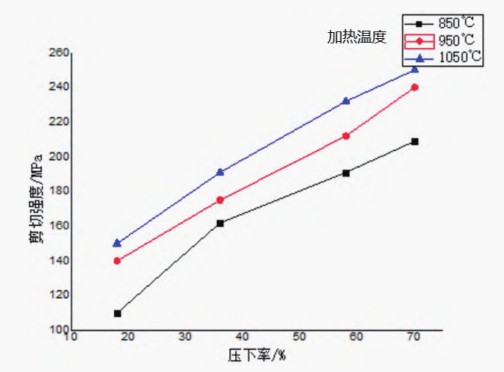
The elongation rate A of titanium steel composite plate is required to be no less than the lower value of the median value of the base or cladding material standard. The shear strength of the interface between Class 0 titanium steel composite plates is ≥ 196MPa, and the shear strength of the interface between Class 1 and Class 2 titanium steel composite plates is ≥ 140MPa. The shear strength of titanium steel composite plates at different temperatures is shown in Figure 2.
Buckling analysis.
Due to the decrease in overall bearing capacity and stability of the plate after deflection, the increase in deflection will affect its performance. Therefore, the current regulations limit the width to thickness ratio of the plate, requiring that the plate cannot undergo local instability before overall instability occurs. Considering the buckling effect on the strength of the plate after buckling, the continuous strength method can more accurately take into account the shaping development of composite plates and optimize structural design.