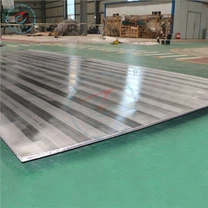
China's 15th Five-Year Plan Outline and supporting new material development plans both cover new energy equipment and high-performance titanium materials, explicitly listing titanium alloy as a key supporting material for the new energy and marine engineering sectors.
In the future, China will build ten major clean energy bases, vigorously develop new energy storage, hydrogen energy and photothermal power generation, and deploy green hydrogen-ammonia-alcohol projects. Titanium alloy is designated as a key category of advanced non-ferrous basic metal materials. It requires breakthroughs in high-strength and high-toughness titanium alloys, wide titanium plates and precision titanium profiles to serve aerospace, high-end equipment, new energy and marine engineering fields.
It is clearly pointed out that titanium material is an essential corrosion-resistant and lightweight material for hydrogen energy, lithium energy storage and offshore wind power. It is expected that the demand for titanium materials in the new energy sector will double during the 15th Five-Year Plan period. The key development directions include electrolyzer bipolar plates, high-pressure hydrogen storage tanks, anti-corrosion pipelines, heat exchangers and fasteners for offshore wind power.
High-performance titanium materials are widely used to replace traditional materials in acid-base fluid pipelines, heat exchange components and anti-corrosion frames of lithium battery and energy storage equipment, as well as high-temperature heat exchange equipment for new-generation nuclear power and photothermal power generation.
As new energy equipment evolves toward large-scale development, offshore layout, long service life and maintenance-free operation, market demand for high-purity titanium materials, titanium alloy plates, pipes, titanium composite materials and customized precision processed parts continues to expand. High-performance titanium materials have become a core fundamental new material supporting cost reduction, efficiency improvement and green low-carbon development of the new energy industry, boasting broad market application prospects.
In the wind power sector, internal structural parts of offshore wind turbine towers, seawater cooling systems, anti-corrosion pipelines, fasteners and supporting structural components of marine platforms rely on the excellent seawater corrosion resistance of titanium materials to greatly reduce later operation and maintenance costs and extend equipment service life. In the hydrogen energy industrial chain, core components such as electrolyzer plates, hydrogen storage and transportation tanks, and pipeline valves at hydrogen refueling stations need to withstand harsh environments of acid-base electrolyte and high-pressure hydrogen. High-performance titanium materials can effectively avoid hydrogen embrittlement and corrosion leakage, ensuring the safe and stable operation of hydrogen energy equipment.