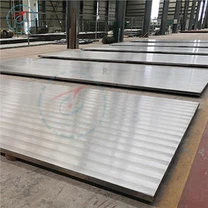
Titanium steel composite panels have received widespread attention in the fields of petroleum, chemical, power, and marine engineering in recent years due to their excellent mechanical properties of steel and corrosion resistance of titanium. However, when titanium steel composite plates are applied in harsh marine environments, their end faces undergo galvanic corrosion due to the potential difference between titanium and steel, which deteriorates their performance during actual service. Therefore, adopting appropriate methods for protective treatment of the end face of titanium steel composite plates is of great significance and value. But at present, there are almost no relevant reports. More research is focused on preparing coatings on the surface of titanium or steel plates to improve the service performance of the substrate, mainly including thermal spraying and laser cladding. The thermal spraying process has high efficiency, flexible and simple operation, but due to the wide temperature range of its heat source, defects such as pores are prone to occur in the coating, and the residual thermal stress is relatively large.
1. Preparation of Titanium Coating
The substrate material is a titanium steel composite plate manufactured by Hunan Xiangtou Jintian Titanium Metal Co., Ltd. using vacuum forming method. The titanium plate is 1.80 mm thick and the steel plate is 10.20 mm thick, as shown in Figure 1. Before preparing the titanium coating, use 220 #, 360 #, 600 #, 800 #, 1000 #, and 2000 # SiC sandpaper to polish the substrate in sequence, followed by ultrasonic cleaning in ethanol for 10 minutes to remove contaminants such as oil and rust on the surface of the sample. The titanium powder used for cold spraying is Ti-01 produced by the Institute of New Materials, Guangdong Academy of Sciences, with a particle size of 50-100 μ m. After sieving, the titanium powder is baked at 120 ℃ for 30 minutes to reduce the impact of moisture on the quality of the coating. The cold spraying equipment was completed on PCS1000 produced by Plasma Giken in Japan.

Use an electric discharge wire cutting machine to cut the sample for microstructure characterization and composition analysis of the cross-sectional section. Metallographic samples are prepared by mechanical grinding and polishing methods. A nitric acid ethanol solution with a volume ratio of 1:19 is used as an etchant. The microstructural features were characterized using OM (Leica DVM6M) and SEM (Phenom ProX) equipped with EDS. Microscopic examination of metallographic samples
Hardness was measured using a Vickers microhardness tester with a residence time of 10 seconds and a load of 500 g. Measurements were taken every 0.4 mm from the coating surface to the substrate. The friction and wear test adopts a high-speed reciprocating friction and wear testing machine, with a load of 20 N, a time of 10 min, a frequency of 1 Hz, a test length of 10 mm, and GCr15 steel balls as the friction pair. Before electrochemical testing, the sample is sealed with epoxy resin, polished with metallographic sandpaper to remove surface oxides, cleaned with ethanol and pure water, and finally dried with hot air to obtain a clean coating surface. The experiment is conducted at room temperature. The experimental medium is a simulated seawater solution (3.5% NaCl), using a three electrode system. The sample is the working electrode, the counter electrode is a platinum plate, and the reference electrode is a saturated calomel electrode (SCE). Electrochemical impedance spectroscopy was tested on an electrochemical workstation (CHI760E) at an open circuit potential, with a testing frequency of 105~10-2Hz and a disturbance potential of 10 mV applied. The salt spray corrosion test machine (EASS-100) of China Electrical Apparatus Research Institute Co., Ltd. is used for the salt spray test. According to the Corrosion Test in Atmosphere - Salt Spray Test (GB 10125-1997), the test solution is 5% NaCl solution by mass fraction, and the temperature in the spray box is 35 ℃.
3.The influence of gas pressure and temperature during powder feeding on the microstructure and morphology of titanium coatings
One of the important parameters in the cold spraying process is the critical velocity of the sprayed particles before they collide with the substrate. For a given matrix material, there exists a critical velocity at which only particles with a velocity greater than the critical velocity can be deposited to form a coating, while particles with a velocity lower than the critical velocity will bounce back to form the coating. The critical velocity of cold spray particles depends on factors such as material density, melting point, ultimate tensile strength, and initial particle temperature. During the cold spraying process, metals such as Cu, Zn, and Al are prone to large plastic deformation of particles, resulting in dense coatings. However, Ti, due to its high melting point, is difficult to obtain dense coatings through the collision deformation deposition theory of cold spraying. However, relevant studies have shown that increasing the temperature and pressure of the powder feeding gas can effectively reduce the porosity of the coating. The porosity of the coating is a key factor affecting its protective performance. Within the allowable range of the equipment, the author investigated the influence of the temperature and pressure of the powder feeding gas on the microstructure of the titanium coating.
Figure 2 shows the metallographic morphology of titanium coating samples prepared under different combinations of powder feeding gas pressure and temperature parameters. Due to the fact that cold spraying belongs to the solid-state deposition method, it has little thermal impact on the substrate, and the particles do not melt during the deposition process. Therefore, the titanium plate and steel plate on the substrate side are intact, and titanium coatings can be prepared within the temperature and pressure range of the powder feeding gas studied. From Figure 2, it can be seen that the pressure and temperature of the powder feeding gas have little effect on the coating thickness. The coating thickness prepared under several conditions within the same spraying time is comparable, with an average thickness of 2.70 mm. However, the parameters of the powder feeding gas have a significant impact on the structure of cold sprayed titanium coatings.

Conclusion
1) Increasing the temperature and pressure of the powder feeding gas during the cold spraying process not only helps to reduce the porosity of the coating and improve its density, but also suppresses coating delamination and strengthens the internal bonding of the coating. When the temperature and pressure of the powder feeding gas were increased from 800 ℃ and 3 MPa to 900 ℃ and 5 MPa, respectively, the porosity of the coating decreased from 4.25% to 1.14%.
2) Due to the low temperature of the powder feeding gas during the cold spray preparation of titanium coatings, no significant oxidation was observed in the prepared titanium coatings, which are mainly composed of metallic Ti. At the same time, under higher powder feeding gas temperature and pressure conditions (900 ℃ and 5 MPa), the titanium coating on the titanium steel composite plate side has good compatibility with the substrate and no obvious interface due to consistent composition; The interface between the titanium coating and the steel plate is clear, and there is no significant interdiffusion of elements.
3) Increasing the temperature or pressure of the powder feeding gas during the cold spraying process is beneficial for strengthening plastic deformation, improving the density of the coating, and thus enhancing the microhardness and wear resistance of the coating. The titanium coating prepared using GCr15 as the friction pair, with a powder feeding gas pressure of 5 MPa and a temperature of 900 ℃, showed a wear rate of 0.32 × 10⁻³mm3/(N · m) after 10 minutes of wear under a load of 20 N.
4) The cold sprayed titanium coating prepared on the end face of titanium steel composite plate has good corrosion resistance. After 1000 hours of neutral salt spray test, the coating is intact and there is no obvious rust corrosion on the surface, indicating that the titanium coating effectively prevents corrosive particles from penetrating into the substrate, thereby significantly improving the service performance of titanium steel composite plate in marine environment