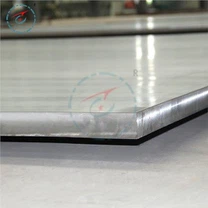
For stainless steel clad plate welding, the base layer and the clad layer should be welded separately, and the transition layer should be welded at the junction of the base layer and the clad layer. Basic welding and multi-layer welding belong to the same kind of welding, and the process is relatively mature. The welding of the transition layer belongs to the welding of dissimilar steels, and it is also the key to the welding of stainless steel-clad plates. The composition and performance of the base layer and the cladding layer are quite different, so controlling the welding of the transition layer is the key to obtaining high-quality joints.
The main problems and solutions when welding the transition layer of stainless steel clad plate:
(1) Dilution of weld metal Since the base carbon steel does not contain alloying elements Cr and Ni, it has a dilution effect on the alloying elements Cr and Ni in the weld metal when melting, so that the content of austenite forming elements Cr and Ni in the weld If it is reduced, the martensitic hardened structure will be formed in the weld metal, and cracks will easily occur, thereby deteriorating the quality of the joint.
Solution:
When welding the transition layer, welding materials containing more chromium and nickel should be used, so that even if it is diluted by the base layer, they will not produce a martensitic hardened structure. At the same time, the appropriate welding method and welding process are adopted to reduce the penetration depth and weld dilution on the base side.
(2) When stainless steel is used as the filler metal in the transition layer, the components of the carbon steel base material and the filler material are very different. Since the liquid metal on the carbon steel side has a lower temperature and poor fluidity, it cannot be fully mixed with each other, so the larger the proportion of carbon steel components near the fusion line, the more serious it will be diluted. This part of the diluted weld metal is called As a transition layer, it forms martensite between carbon steel and stainless steel welds. When the martensite zone is wide, the toughness of the joint will be significantly reduced, and brittle failure will occur during use.
Solution:
When high-impact toughness is required, high nickel filler metal should be used.
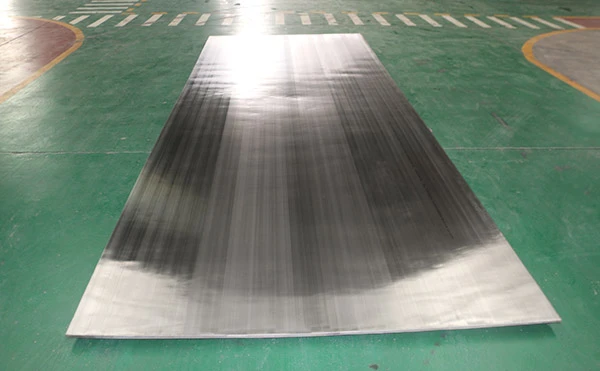
(3) The carbon steel at the base of the diffusion layer has high carbon content and low content of alloy elements, while stainless steel, on the contrary, forms a concentration difference on both sides of the fusion line. When welding clad steel plates, carbon diffuses from carbon steel to stainless steel welds. As a result, a decarburization layer is formed on the carbon steel side of the fusion line to soften, and a carburization layer is formed on the stainless steel weld layer to harden. The diffusion layer increases with the increase of temperature and residence time at high temperatures.
Solution:
Due to the great difference in metal properties on both sides of the fusion line, the stress on the joint may cause stress concentration and reduce the high-temperature strength and plasticity of the joint. Therefore, the diffusion layer is the weak link in the welding of stainless steel clad plates, so attention should be paid to the welding process of the diffusion layer.
(4) High-stress state of welded joints Due to the difference in linear expansion coefficient and thermal conductivity between carbon steel and stainless steel, thermal stress will occur at high welding temperatures. At the same time, when the welded joint works under alternating temperature conditions, it is easy to form thermal fatigue cracks.
Solution:
Therefore, it is impossible to eliminate the welding stress by post-weld heat treatment. A high-nickel-based electrode with a linear expansion coefficient close to that of carbon steel and good plasticity can be selected for welding so that the thermal stress is concentrated at the fusion line on the stainless steel side. Through the plastic deformation of the stainless steel, the reduction adverse effects of small thermal stress and thermal fatigue stress.
Baoji Taicheng Clad Metal Materials Co., Ltd, as a metal composite plate factory, has many years of production and sales experience in the industry, serving customers all over the world, all kinds of customized stainless steel clad plates, welcome your purchase!