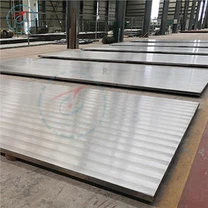
Metal based composite materials can compensate for the shortcomings of single metals or alloys in design, and have excellent comprehensive performance, becoming a research hotspot in materials science today. Titanium steel composite plate is an advanced metal layered composite material composed of titanium plate and steel plate in a layered manner. It combines the excellent corrosion resistance of titanium with the high strength and low cost of steel, and is widely used in fields such as petrochemical power, salt chemical, transportation, seawater desalination, marine engineering, and daily life. With the expansion of the application of titanium steel composite plate materials in different fields, its production and preparation technology has been continuously developed. Especially in recent years, research on titanium steel composite panels has significantly increased, mainly focusing on improving product performance and innovating processing techniques. Yang Wenyue, Zhang Hangyong, Shen Chunyu and others have conducted research on improving the interface composition and mechanical properties of titanium steel composite plates based on conventional explosive composite methods; Tian Shiwei, Huang Zhao, Yang Yun, and others focused on the rheological behavior, interface structure, and control of bimetallic materials in steel composite plates by direct rolling composite

Conducted research; Bai Yuliang, Zhu Kunliang, and others have innovated the processing technology of titanium steel composite plates, using hot press diffusion method, cold rolling pre composite hot rolling method, and cold rolling method to prepare titanium steel composite plates. From this, it can be seen that the production technology of titanium steel composite plates still attracts the attention of many scholars. Studying its preparation technology can provide useful references for industrial production. The research on the development and changes of titanium steel composite plate technology mainly introduces the research progress of titanium steel composite plate from the perspective of literature review in the field. As a highly representative technical document, patents carry a large amount of technical information and are an important way to analyze technological changes. At present, there is relatively little research on the development and changes of titanium steel composite plate technology through patent analysis. The author systematically analyzed the global patent data of titanium steel composite plates, studied their technological development changes, and provided reference for enterprise technological innovation and the research and development of high value-added products.
1. Technical decomposition and data sources
Taking the preparation process of titanium steel composite plate as the main line, it is divided into three categories according to the production process: pre-processing, processing, and post-treatment, which are regarded as the first level technical branch. By decomposing the first level technical branch into two levels, 11 secondary technical branches were obtained. After further expansion based on the initial patent examination, a total of 13 secondary technical branches were obtained, as shown in Figure 1. Based on the global patent search and analysis database of Patsnap, a search was conducted on patent documents related to titanium steel composite plates. The specific process and results are as follows: ① Data collection principle: refinement was carried out on the basis of comprehensive analysis, and a combination of classification numbers and keywords was used to search for relevant technical distributions. The selection of keywords should focus on unambiguous words that represent product or technical features, and appropriately utilize literature phrases to expand keywords and reduce impurity data Search scope: As of November 30, 2021, the search object is global invention and utility model patents Data processing: Some vocabulary has ambiguity, and specific retrieval requires more detailed logical strategies or manual reading methods for screening and denoising, followed by data processing steps such as classification, indexing, and secondary indexing for analysis.
④ Search results: The number of patents included in the study is 869, and after merging the same family and classifying and indexing the data, it is 632.
The overall application trend of patents for 2 titanium steel composite plates
2.1 Global Patent Application Trends
Figure 2 shows the global patent application status in the field of titanium steel composite plate. As shown in Figure 2, the global patent applications in the field of titanium steel composite panels are showing a gradual growth trend. Before 1979, it was in the embryonic stage of technology, and the annual number of patent applications remained below 2. From 1980 to 2000, it was a period of technological development, and the annual number of patent applications showed several small peaks, with the highest maintained at around 15. After 2000, it was in a period of technological growth, with a significant increase in patent applications. In 2018, the number of patent applications reached the highest, reaching 60.
2.2 Analysis of Global Regional Layout
The patent applications in the global titanium steel composite plate field are highly concentrated. As shown in Table 1, during the statistical period, research and technological innovation were mainly concentrated in the middle
The Asia Pacific region, dominated by China and Japan, accounts for approximately 96% of the global patent application volume. Analyzing the patent application situation in China and Japan, it can be seen from Figure 3 that Japan was the earliest country to develop titanium steel composite panel technology, especially after the 1980s, when it conducted a large amount of systematic research, greatly improving the production technology level of Japan's titanium steel composite panel field, and also obtained a large number of patents during this period. After 2000, Japan did not continue to lay out patents in this field. In the early days, China's titanium steel composite plate products were mainly imported. With the increasing demand for titanium steel composite plate products domestically, it greatly promoted the localization of titanium steel composite plate products. The patent layout of Chinese local applicants in this field has also gradually increased. Since 2006, a total of 430 patents have been applied for, ranking first in the world in terms of the number of patent applications.