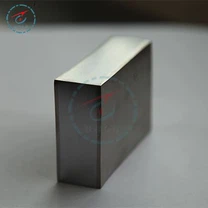
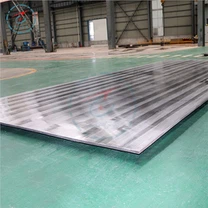
The flue gas desulfurization tower adopts stainless steel composite plates that can ensure the strength and anti-corrosion effect of the flue gas desulfurization tower, and the cost will be reduced by 4.65 million yuan compared to using integral stainless steel plates. Although the device has good environmental performance, it has limitations in construction organization, construction technology, safety construction, and other aspects
The requirements are very high, especially for the on-site welding construction of stainless steel composite plates in flue gas desulfurization towers, which is a key technical challenge. Effective technical measures were taken during the construction process to ensure the overall quality of the project.
Welding construction procedures
Welding management is strictly carried out according to established welding procedures, and materials, welding rods (wires), welder training, welding process evaluation, and other work are done before construction; The welding process shall be strictly constructed according to the welding technology; Perform non-destructive testing and acid pickling passivation treatment after welding.
The flue gas desulfurization tower adopts stainless steel composite plates, with a material and specification of 16MnR+304L, and plate thicknesses of 20+3, 14+3, and 10+3, respectively. The welding of stainless steel composite plates uses different welding materials to weld the cladding, transition layer, and base layer, with the key point being the welding between the cladding weld and the base weld. If the usual welding method is used, there are two possible adverse consequences. Firstly, if low-alloy steel welding rods are used to weld the base layer, they may melt into the stainless steel cladding, causing alloy elements to infiltrate the weld seam, increasing the hardness and reducing the plasticity of the weld metal, and easily causing welding cracks. Secondly, if stainless steel welding rods are used to weld the cladding, it may melt to the base layer of the stainless steel composite plate, diluting the alloy composition of the weld and reducing the plasticity and corrosion resistance of the weld metal. Therefore, in order to prevent the above two adverse results, transition welding rods (welding wires) are used to ensure the welding quality of stainless steel composite plates.
Welding sequence
To prevent the phenomenon of secondary heating and decreased corrosion resistance of stainless steel welds caused by welding the stainless steel layer first and then the base layer, the internal welds of the base layer are first welded, the external welds of the base layer are cleaned, then the internal transition layer is welded, and finally the composite layer is welded
Welding precautions
1) Welding at the grassroots level. The welding base weld bead shall not touch or melt the composite material. Weld the substrate first, and the root or surface of the weld bead should be 1-2mm away from the composite interface
2) Welding of transition layer. When welding the transition layer, it is necessary to minimize the amount of base metal melted and reduce the fusion ratio while ensuring good fusion. For this purpose, small-diameter welding rods or wires and smaller welding line energies should be used. The thickness of the transition layer should not exceed 2mm.
3) Welding of multiple layers. When welding the cladding, attention should be paid to protecting the surface of the cladding to prevent damage from welding spatter. It is not allowed to randomly strike arcs, weld fixtures, and temporary supports on the surface of the composite layer. The surface of the overlay weld should be kept as flat and smooth as possible with the overlay surface. yes
The excess height of the weld seam shall not exceed 1.5mm.
4) When welding, try to use low current multi-layer and multi pass welding, and cool slowly after welding. Welding shall not be carried out in rainy or snowy weather, and windproof measures shall be taken for argon arc welding.
5) Preheating and post heat treatment should be adopted for winter construction.
Welding Inspection
1) Visual inspection of welds. No porosity, undercutting, arc craters, splashes, and uniform and beautiful welds.
2) Weld seam inspection. The inspection ratio of butt welds on the head and cone of the flue gas desulfurization tower is 100%, and the inspection ratio of other butt welds is 10% through radiographic testing
Tested 239m, with a pass rate of 98.6% for a single inspection.
3) Microstructure of weld seam. 304 side austenite+ferrite; 16MnR side martensite+ferrite, microstructure of weld seam