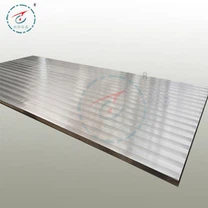
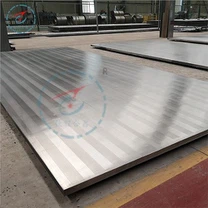
The rolling composite method is a process in which different metal materials are welded by using the high pressure generated during rolling at a certain high temperature. According to the different rolling temperatures, the rolling composite method can be divided into cold rolling and hot rolling. The cold rolling process is relatively simple and can realize the precise combination of various metal sheets, but it has higher requirements for the performance of the rolling mill equipment. The hot-rolled composite method is to superimpose the substrate and the composite plate to form a billet, and then heat it to a certain temperature and then roll it. Under the synergy of high temperature and high pressure, the substrate and the composite plate are firmly combined. The mainstream technology of steel composite plates.
The main process steps of rolling and forming of titanium steel clad plate are as follows:
1. Select the appropriate substrate, intermediate layer, and composite board
Mainly follow the following 3 principles:
1) Inhibit the mutual diffusion of carbon and iron
2) To achieve good metallurgical bonding
3) Improve the processing capacity of existing equipment
2. Choose the right insulation material
During symmetrical rolling, a layer of insulating material with a thickness of 10-35 μm is applied to the back of the cladding plate to avoid the backside adhesion and surface wrinkling of the cladding plate. Commonly used isolation materials are mainly chromium oxide, aluminum oxide, titanium dioxide, iron oxide, silicon dioxide, water glass, and so on.
3. Surface treatment
Before forming the billet, the surface to be bonded is processed into a tooth shape of 0.01~3mm, or the roughness of 30~90μm is processed on the bonding surface of the steel.

4. Material composition method
Usually, the clad sheets prepared by symmetrical rolling or overlapping rolling need to be pre-assembled to improve the quality and yield of the clad sheets.
5. Heating
The heating temperature is generally higher than 700°C and lower than 900°C. On the basis of uniform heating, the heating time should be shortened as much as possible, depending on the size of the blank, the heating efficiency, and the composition of the intermediate layer.
6. Rolling
If the metal sheet is the intermediate layer, the pass reduction rate should be greater than 10%, and the cumulative deformation amount should be greater than 70%; for liquid extrusion rolling, the first pass should be processed underground, and the deformation amount should be greater than 10%.
7. Heat treatment
There are many factors affecting the rolling temperature, such as the rolling method, billet size, heating temperature, etc. It is necessary to precisely control the rolling temperature or the cooling rate after rolling to improve the interface strength of the clad sheet.
8. Leveling
The thermal expansion coefficients of titanium and steel are quite different, and the composite plate is easy to bend to the steel side after forming. The titanium-steel composite plate should be leveled before use.
The rolling method is mainly used to prepare large-size titanium-steel clad plates and sheets. The product size is accurate, the material utilization rate is high, the production cost is low, and the environmental pollution is small, but the process requirements are very strict.
Baoji Taicheng Clad Metal Materials Co., Ltd is a titanium-steel clad plate factory. At present, the company has 2 complete metal composite plate production lines with more than 300 employees. Perfect staffing is the basis for us to meet the needs of many domestic and overseas customers. Buy metal composite plates, and find Baoji Taicheng!