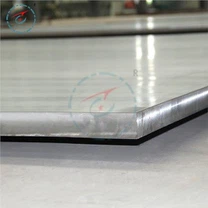
Titanium-steel clad plate is an advanced layered metal composite material with ordinary carbon steel as the base layer and pure titanium or titanium alloy as the cladding layer, and the price is only a quarter of pure titanium, is widely used in petrochemical, vacuum salt, marine engineering, and other fields. The technological process of preparing titanium-steel clad plates by the rolling method includes surface treatment, billet sealing, welding, hot rolling, cutting, splitting, etc. Before forming the billet, the titanium plate and the steel plate need to be surface treated to remove the gas, dust, grease, oxide film, and other dirt on the surface of the billet. As the primary process of preparing titanium-steel clad sheets, surface treatment is an important prerequisite to ensure the purity of the clad interface, and the high cleanliness of the clad interface is a key factor affecting the quality of the clad in subsequent rolling.
In recent years, most reports on the surface treatment of titanium-steel clad plates focus on the grinding process of the steel base layer, but there are few reports on the surface treatment process of the titanium cladding layer. Affected by the unique physical and chemical properties of titanium cladding, titanium absorbs hydrogen at 200 °C, oxygen at 400 °C, and nitrogen absorption at 600 °C. When the surface treatment process is not selected properly, the surface of the titanium cladding is easy to produce oxides during the grinding process. Equal brittle phase, the surface cleanliness of the material is reduced and the hardness is significantly increased, which affects the subsequent composite quality of titanium and steel.

At present, mechanical treatment, chemical treatment, laser treatment, and other methods are mainly used to remove the surface grease and oxide film of titanium and titanium alloys, so as to obtain a high-clean titanium cladding surface. The mechanical treatment method mainly uses machine tools, grinding machines, sandblasting, and other methods. Although it can effectively remove surface oxides, the processing is time-consuming, and it is difficult to process titanium cladding with a large area and a thin thickness. The chemical treatment method includes pickling, alkali cleaning, chemical plating, etc. It is suitable for cleaning thin parts, but it will leave an adsorption layer composed of liquid and gas after corrosion. Laser treatment is often used as a surface modification method for titanium materials, and the degree of cleaning is affected by factors such as its power parameters.
Baoji Taicheng Clad Metal Materials Co., Ltd is a professional titanium clad steel plate manufacturer, which can provide high-quality metal clad plates for customers. The titanium clad plates we supply have smooth surfaces and no burrs, and the product quality has been unanimously recognized by customers. If your company wants to purchase titanium steel composite plates, welcome to consult and cooperate!