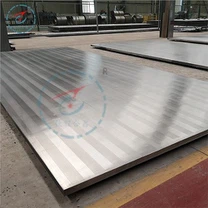
1. Generally, mechanical methods should be used for cutting and beveling of titanium composite steel plate cylinders, mainly shearing machines, milling machines, semi-automatic flame cutting machines, and edge planing machines.
2. The titanium steel composite plate should be strictly controlled during shearing:
(1) The gap between the cutting edges of the shearing machine;
(2) The steel base layer should be facing down, taking care to prevent delamination.
3. When performing titanium multi-layer edge trimming, attention should be paid to strictly control the downward feed of the disc cutter. If the titanium multi-layer milling is too shallow, it will be difficult to trim the edge, and if the milling is too deep, it will damage the carbon steel base layer.
4. Flame cutting or plasma cutting is also allowed when the thickness of the titanium steel composite plate cylinder is large or the shape is irregular. At this time, the following points should be noted:
(1) Avoid sparks splashing on the surface of titanium materials, causing iron ion pollution;
(2) The cutting edges and grooves are still processed by mechanical methods and the pollution layer is removed;
(3) Before cutting, you must consider leaving a certain amount of machining allowance for the subsequent dimensions of the groove.
5. When the bevel processing of the titanium steel composite plate cylinder is finished, the elongation and bevel dimensions of the cylinder must be re-examined before rolling to prevent the deviation of the size processing.